On June 26, 2026, a talk session was held under the theme, “What Kind of Platform Can Turn Individual Passion into Value? Exploring the Infrastructure for Engagement and Co-Creation Through the Practice of Peatix.” The session featured Yuji Fujita, Co-Founder, Representative Director, and Chief Marketing Officer of Peatix Japan Inc., and Kazuhiko Asami, Producer of AWRD at Loftwork Inc.
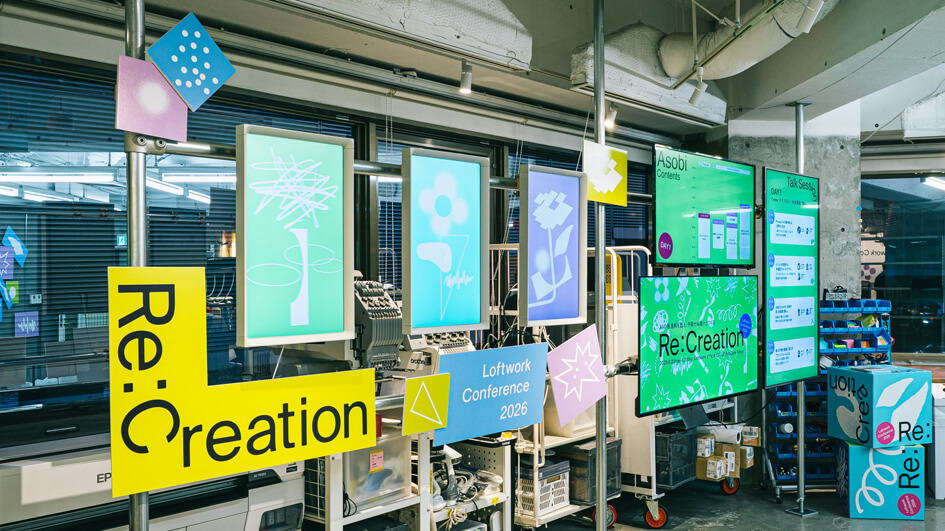
Held over three days from June 26 to 28 as part of Loftwork Conference 2026, which was themed “Re,” this talk session brought together the perspectives of the people behind AWRD and Peatix, both of which have evolved as “platforms that turn individual passion into value.”
As the title suggests, the discussion covered a wide range of topics, including side jobs, communities, fandom and “oshi-katsu,” and dual-location living. In this article, we report on what took place during the talk session.
From “Belonging” to “Engagement”: The Future of Identity
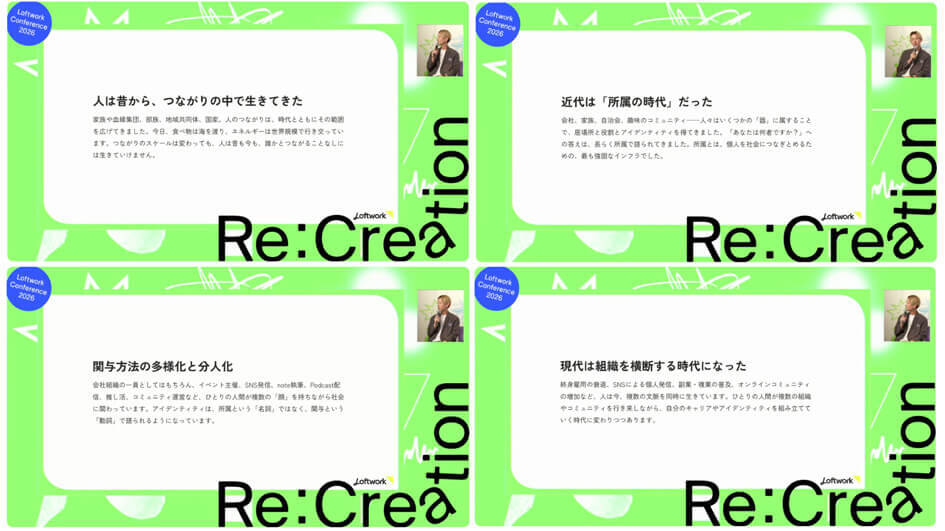
At the beginning of the talk session, Kazuhiko Asami of Loftwork framed the current social landscape as one in which “the power of belonging is weakening, and society is shifting toward one where each individual seeks a sense of grounding in what they choose to remain involved in.”
Since the advent of modern society, often described as the “era of belonging,” people have gained a sense of identity—of where they belong and what role they play—by becoming members of various “containers,” such as companies, families, neighborhood associations, and hobby-based communities. For a long time, people’s identities and the question of “who they are” were largely defined by the organizations and groups to which they belonged.
However, as systems such as lifetime employment have weakened, and as the Japanese government began moving in 2018 toward allowing side jobs that had previously been prohibited in principle, the era in which belonging was the most powerful infrastructure connecting individuals to society has begun to change. Asami points out that we are gradually moving into an era of “engagement.”
He then shared the central question guiding the session with the audience: How can we create systems that not only support people’s engagement, but also transform that engagement into a sense of belonging and value? This became the starting point for a conversation between the two speakers, both of whom are involved in operating platforms that connect people and their passions.
“I think we are entering an era in which, rather than belonging to a single organization, people move across multiple organizations. In the past, identity was described using the noun ‘belonging,’ but I believe it is increasingly being described using the verb ‘engaging.’”
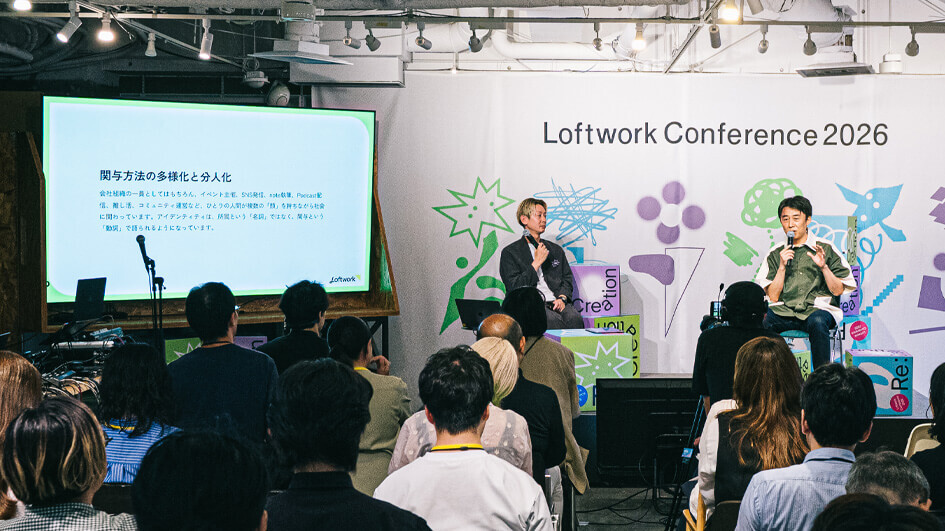
In recent years, more and more people have taken on the role of the creator and broadcaster of their own expression—through social media, hosting events, writing articles on note, and producing audio content such as podcasts. At the same time, there has also been a rise in people who engage with communities by supporting and cheering on others, as seen in activities such as “oshi-katsu,” or fandom and fan culture.
Amid these diverse forms of connection, people navigate their lives by bringing different versions of themselves into being depending on the context and the people they interact with. In other words, we are increasingly living in an era in which no one has a single, fixed identity, but instead engages with society while carrying multiple versions of the self.
Responding to Asami’s question, Yuji Fujita of Peatix Japan reflected on Peatix’s journey as it celebrates its 15th anniversary this year, sharing how the company has supported a wide range of “individual passions” over the years.
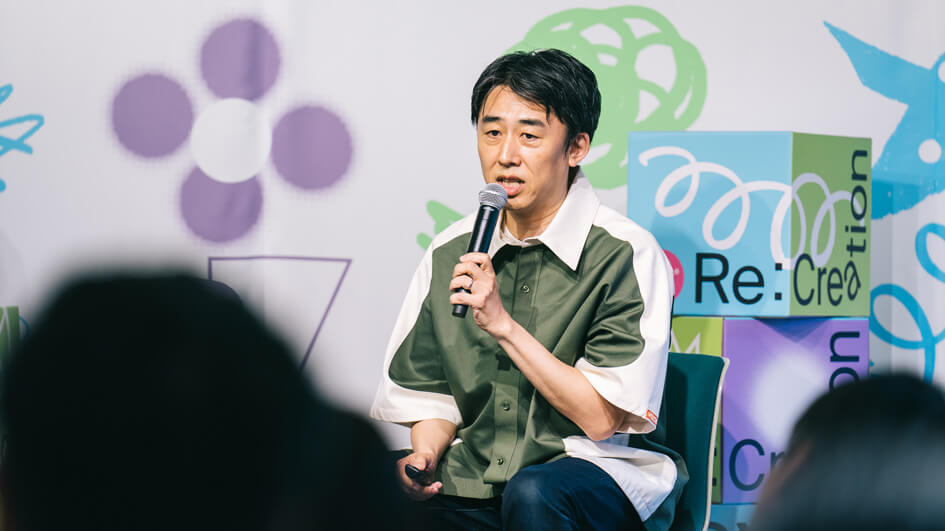
“Looking back over Peatix’s 15-year history, I think the ways in which people connect and engage with one another have continued to change significantly. When we launched our service in May 2011, as you know, it was just after the Great East Japan Earthquake, and people were in a situation where activities such as events had to be suspended or scaled back.
Against that backdrop, some people began organizing charity events, asking themselves what they could do to support the recovery, while others started their own initiatives and built a following around their individual causes. We wanted to support precisely these kinds of activities—activities born from the passion and drive of individuals.”
Can We Really Let Go of Belonging? Where We Stand After the End of the Side-Job Ban
Afterwards, Asami introduced four topics to explore in connection with the Loftwork Conference 2026 catchphrase, “Let’s begin here the encounters that will reshape the next ten years.”
The first topic, which built on the earlier discussion of “from belonging to engagement,” posed the question: “It has been about seven years since Japan’s Ministry of Health, Labour and Welfare announced in 2018 that it would allow side jobs in principle. So why do people still remain with a single company?”
According to a 2023 survey by the PERSOL Research and Consulting Institute and a 2025 survey by Mirai Works※1, the percentage of companies that allow side jobs has risen to 60.9%, while the percentage of full-time employees who actually have a side job remains at just 7%. Although 40.8% of employees express an interest in taking on a side job, 44.8% of large companies still prohibit them. Do these figures reflect how slowly society is changing, or do they indicate that there are still rational reasons for remaining with a single company? Drawing on the example of an acquaintance who has been unable to take the step toward a side job, Asami pointed to the broader social atmosphere surrounding side jobs.
※1 — Sources: PERSOL Research and Consulting Institute
https://rc.persol-group.co.jp/thinktank/data/sidejob4/
Mirai Works Inc.
https://mirai-works.co.jp/mwri/report/report-reskilling/6024/
“I asked a friend who works for a major Japanese company, ‘Why don’t you take on a side job?’ He told me, ‘The company allows it, but I have to submit an application…’ I said, ‘Then why not just apply?’ But apparently, because the company operates across such a wide range of business areas, almost anything he might do would be considered a conflict of interest, so his application would not be approved. In a sense, that may be a defensive measure on the company’s part, but I also think it reflects the broader mood in society.”
In response, Fujita suggested that while the shift “from belonging to engagement” may continue to accelerate, there may still be many people who are unable—or unwilling—to completely let go of belonging to a single organization.
“If 60% of companies now allow side jobs, then I think we’ll see an increasing number of people finding new places where they belong through side jobs, or creating communities around their hobbies. However, people in their 40s and older, like me, have spent decades belonging to a company as a single, secure place they can rely on, so I feel that completely letting go of that sense of belonging may be difficult. At the same time, more and more people among younger generations are beginning their careers through engagement with different communities and activities. In ten years, the balance may shift, and that could also change how companies approach work.”
Is Turning “Oshi” Culture into Self-Expression Creating New Sources of Discomfort?
The next topic, “Will Communities Move Beyond the Corporate World?”, focused on fandom communities, where many people are deepening their engagement as the role of companies as places of belonging continues to change. According to a 2025 survey by Oshi-katsu Research Institute, approximately 14 million people in Japan—equivalent to 17% of the country’s total population—are currently engaged in “oshi-katsu,” with the market estimated to be worth ¥3.5 trillion. Reflecting on the growing popularity of fandom-related events on Peatix, Fujita posed the question of whether the era in which companies functioned as the primary units of community “might actually have been the unusual one.”
“When I look at the events listed on Peatix, fandom-related events are particularly popular. Author events held by bookstores and events celebrating the publication of photo books, for example, receive an enormous number of applications, and I feel that people’s passion for these activities is continuing to grow. In that sense, I think it may be a natural development for communities to move beyond companies in the future.
Communities began to form within companies around the Showa era. Originally, they existed outside companies, but by bringing them into the workplace as part of Japan’s economic development, companies created an environment in which people could more easily commit themselves to their jobs and gain the understanding of their families. For people of my generation, it’s easy to understand the idea of a company as a place of belonging. But when people look back on history several decades from now, they may actually find it strange that things were ever this way.”
The next topic, “What Happens When Engagement Becomes Identity?”, turned to the question of whether being an “oshi” is a form of self-expression or a new form of constraint. According to a 2025 survey by Oshi-katsu Research Institute, one in three women in their early 30s engages in oshi-katsu. Could making this kind of “engagement” commonplace paradoxically turn it into a new form of pressure, creating another source of discomfort? Fujita reflected on where the sense of constraint in the “age of engagement” might come from.
“As we move from an age of belonging to an age of engagement, it’s possible that people who belong to organizations may develop negative feelings toward those who are deeply engaged in something else, or that people may push themselves too hard in order to engage with something. Ideally, engagement should come from one’s own desires and motivations. But if a social atmosphere develops where engagement becomes something you ‘have to do,’ it could start to feel suffocating. As a result, we might even see a backlash toward belonging.
At the same time, some people who love oshi-katsu may not simply support someone they admire; they may also create their own communities or take action to accomplish something themselves. People can’t be reduced to a single type, and I think it becomes difficult to live when we settle on a fixed image of who someone is and say, ‘This is the kind of person they are.’ Conversely, there’s nothing wrong with someone who is, so to speak, a specialist in belonging. I think it’s perfectly fine for there to be many different ways of belonging and engaging.”
Designing Systems That Encourage “Engagement”: What Is Expected of Local Governments and Companies?
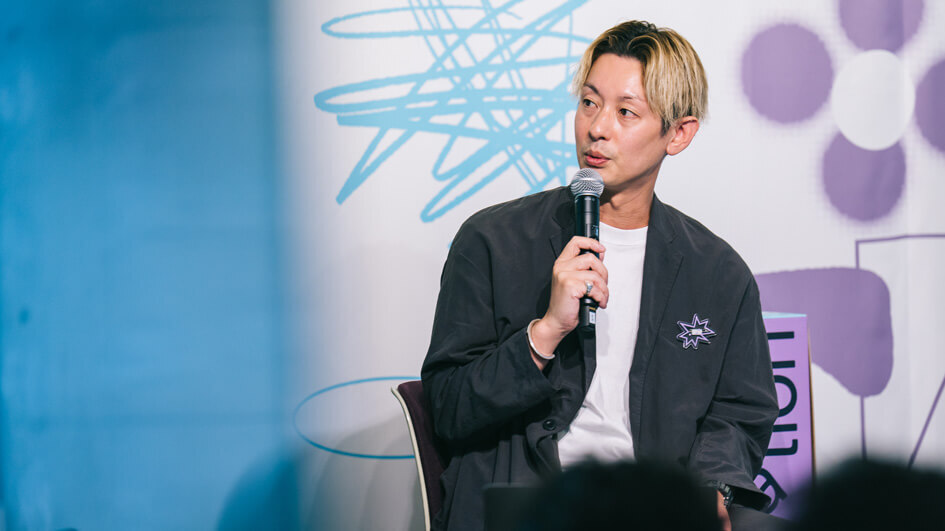
The fourth topic, “What Should Companies and Local Governments Design?”, expanded the discussion beyond companies and fandom communities to local governments as another potential object of belonging and engagement.
According to a 2024 study by the Population Strategy Council, an estimated 740 municipalities—approximately 40% of all municipalities in Japan—are classified as “municipalities at risk of disappearing.” As Japan continues to face population decline, it may become necessary to shift from an era in which people “belong” to a single town to one in which they “engage” with several different places, in order to increase the number of people who maintain connections with these communities. At the same time, existing systems surrounding resident registration, taxation, schooling, and employment may limit the ways in which people can engage with multiple communities.
Asami, who now works at Loftwork’s Shibuya office, previously belonged to Loftwork Kyoto until March of last year. Drawing on his experience of living between Tokyo and Kyoto for a year and a half, he discussed the future of local governments in an age of engagement.
“I hoped that my family, including our children, could live between two locations, but the rules meant that our children had to be enrolled in a single elementary school. They couldn’t, for example, attend school in Kyoto for several days a week and the rest of the week at a school in Tokyo. I think there are many parents whose jobs allow them to live in multiple locations, but because of rules surrounding schooling, among other things, many still end up living in just one place. If more municipalities are at risk of disappearing due to declining populations and tax revenues, it may become necessary to change systems such as those governing schooling and taxation in order to increase the number of people who maintain connections with these communities.”
To close the talk session, Fujita introduced Peatix’s own approach to allowing its employees to take on side jobs.
“At Peatix, some of our members work as community managers for various organizations or organize large-scale festivals as side jobs. In many cases, they actually get started because someone they have worked with professionally asks them, ‘Would you be able to take on this project as well?’
I imagine that at many large companies, such opportunities would be rejected on the grounds that the company itself should take on the work. At Peatix, however, we first check whether the project can be taken on as a company engagement. If it is something the company cannot handle, we allow the employee to take it on as a side job.
Personally, I want our employees to pursue side jobs because they can bring the experience they gain outside the company back to our clients. For a small company like ours, I think it’s important for the company to recognize the value of employees going out into the world and actively engaging in activities beyond their regular work. Otherwise, we may lose younger generations of talent. I believe designing company systems that make this possible is important not only for employee satisfaction, but also for the company’s continued survival and growth.”

The shift “from belonging to engagement” points to a transition toward an era in which what shapes a person’s identity and connection to society is not “where they belong,” but “what they continue to engage with.” At the same time, the sense of security and belonging provided by organizations and communities remains significant. What matters, therefore, is not choosing between “belonging” and “engagement” as opposing concepts, but considering how we can design societies and platforms that support diverse forms of connection and enable each individual to develop their own way of engaging with the world. This was the central question that emerged from the session.
In this sense, open calls and events can serve not merely as tools for recruitment or attracting attendees, but as mechanisms that create a “first engagement” through which people begin to form new relationships with society. AWRD, operated by Loftwork, likewise aims to be more than an open-call platform for collecting artworks. It seeks to foster encounters and connections among diverse individuals, companies, and communities, creating opportunities for new projects and communities to emerge.
The goal is not simply to solicit ideas or artworks, but to connect them to the co-creation and real-world practices that follow. How can we create spaces where diverse people and their passions intersect beyond the boundaries of belonging, giving rise to new forms of engagement that continue to expand? This session offered important perspectives for confronting that question.
Written by: Toshihiro Horiai
Photography by: Ayami Kawashima
Edited by: AWRD Editorial Team
Related Service
Like projects introduced here, AWRD provides many platforms for co-creation where companies and regions can bring their technologies and ideas into society.
We invite you to explore similar initiatives and learn more about how AWRD services can be utilized.
View other co-creation and new business project case studies
Browse the full list of AWRD case studies
How co-creation and design can be leveraged with AWRD
Learn more about AWRD services and use cases
AWRD is an open call platform for co-creation where companies, local governments, and creators collaborate on diverse themes.
By inviting projects and talent from around the world, it enables initiatives in business development, community co-creation, and startup support through open innovation.
From project design to operational support, AWRD accompanies initiatives every step of the way, fostering co-creation that opens up value to society.