To expand the technologies and ideas held by local manufacturing companies into society, it is important not only to produce products, but also to discover new value through collaboration with external perspectives and creators.
Through such co-creation processes, companies can rediscover their strengths and enhance their ability to deliver unique products and brands to the market.
In this article, we introduce the “YAOYA PROJECT,” carried out in Yao City, Osaka Prefecture, where businesses and creators teamed up to take on the challenge of developing new products.
This article is a re-edited version based on the case study “YAOYA PROJECT” published by Loftwork Inc.
Project Highlights
“YAOYA PROJECT 2019 AWRD” received 96 ideas from around the world.
In this article, we introduce the award-winning projects from 2019. Every idea was highly compelling—so much so that some participating companies asked, “Can’t we select more than one?”
After careful deliberation by the secretariat and the companies, eight creators were selected to take on the challenge of the Taiwanese market, along with the product ideas to be developed going forward.
Please take a look at the unique and ambitious outputs of these projects.
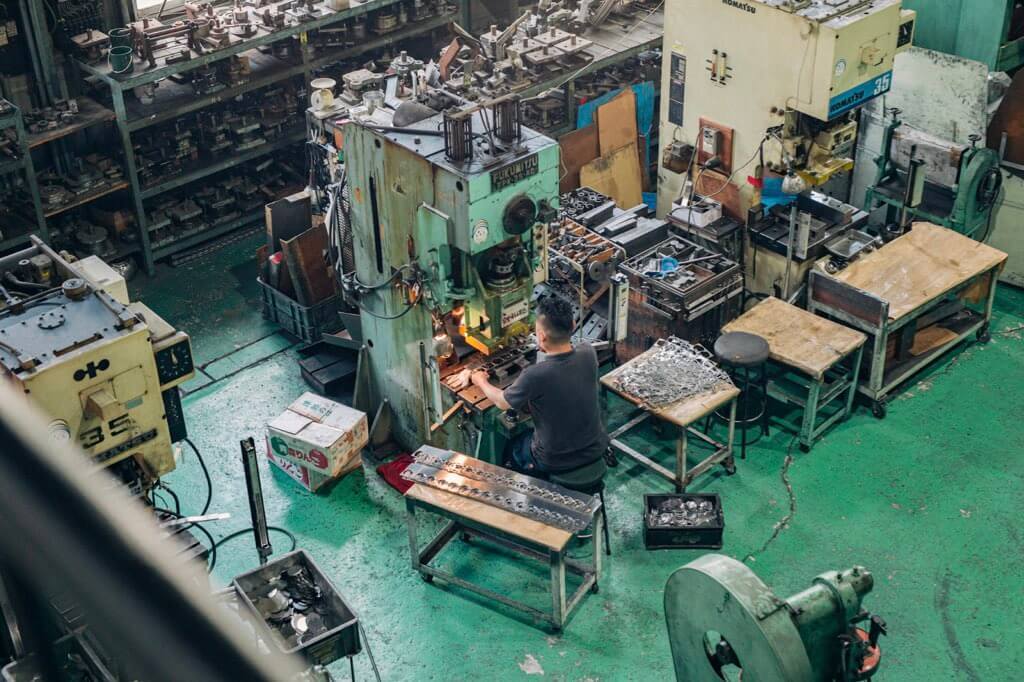
Yao City in Osaka Prefecture is home to many companies with outstanding technologies that support Japanese manufacturing. What distinguishes the city as a manufacturing hub is the wide range of fields its companies are involved in, from household goods to industrial products. However, as competition has expanded globally and price competition has intensified in recent years, it has become increasingly difficult for companies that rely primarily on OEM-based business models to survive—an issue strongly felt by both the city and local businesses.
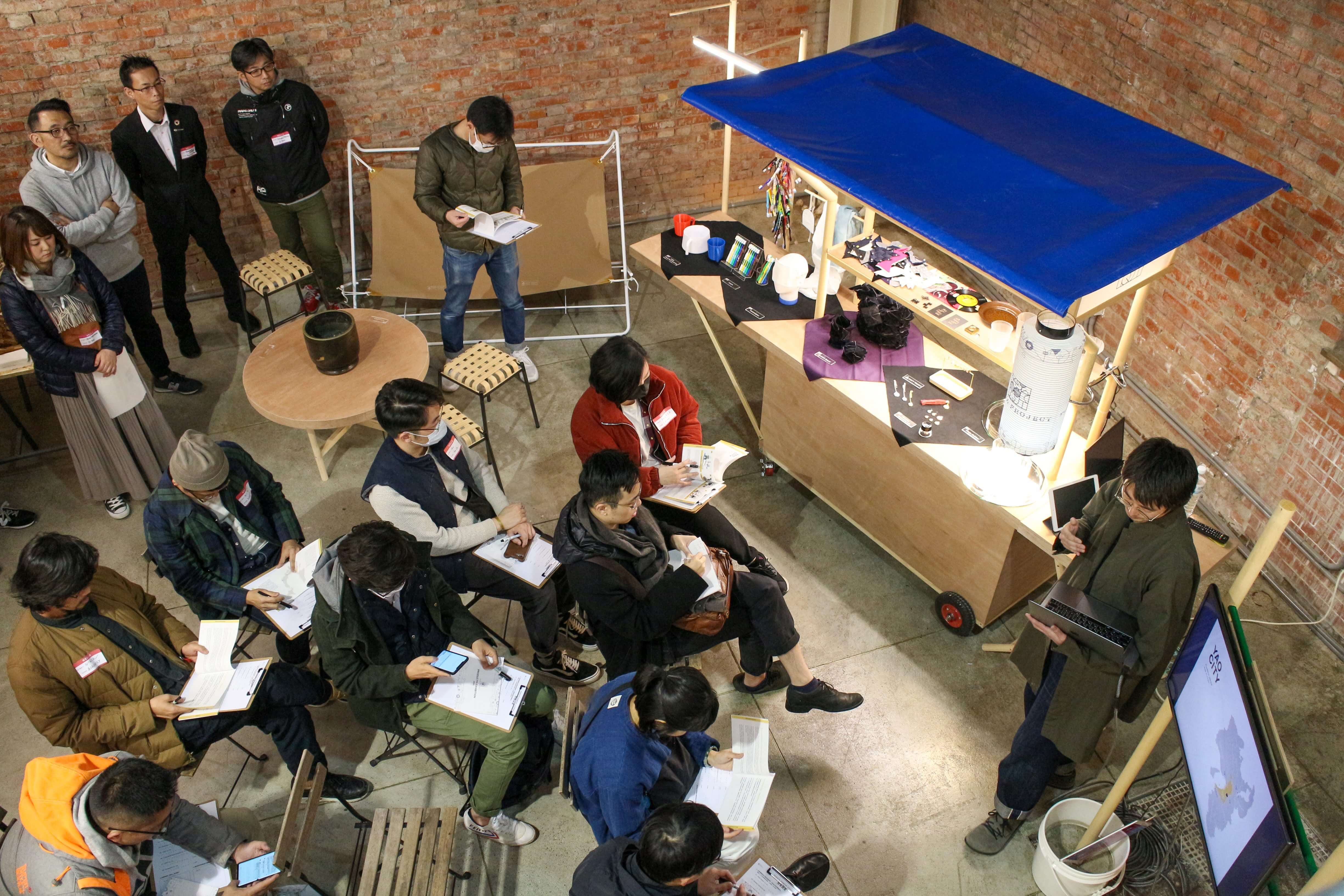
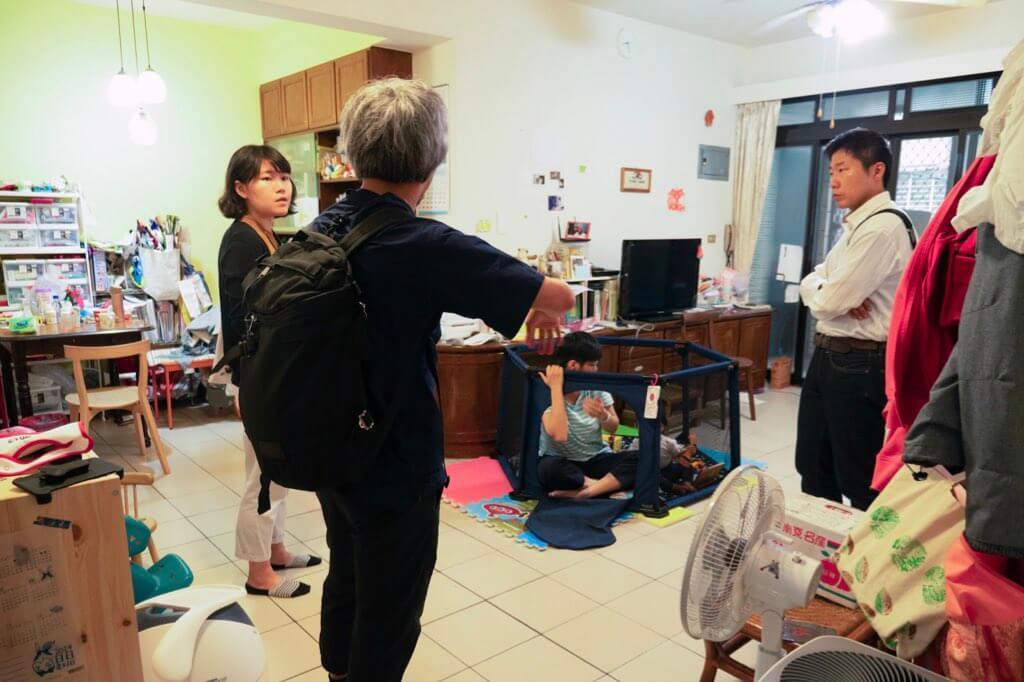
To address this challenge, the YAOYA PROJECT was launched, bringing together eight companies in Yao City and creators to collaborate on product development with the goal of strengthening companies’ product development capabilities, sales capabilities, and brand power. Through processes such as field research, study sessions, and mentoring, participants reexamined “who they are as a company” and aimed to create original in-house products that would help them break away from a subcontracting-dependent structure.
What did the small and medium-sized manufacturers in Yao City gain by taking on B2C product development for the first time, and what changes did it bring about for them?
Joining us to reflect on the project are Mr. Matsuo from the Industrial Policy Division, Economic and Environmental Affairs Department of Yao City; Mr. Ota, President of Kinjo Gomu Co., Ltd., who participated in YAOYA PROJECT 2019 and went on to launch sales of a silicone rock glass through crowdfunding; and the Loftwork Creative Director who served as the project manager.
Written by: Madoka Nomoto
Edited by: Akiko Yokoyama, loftwork.com Editorial Team
Main visual photo: Coelacanth Shokudou LLC.
Key People
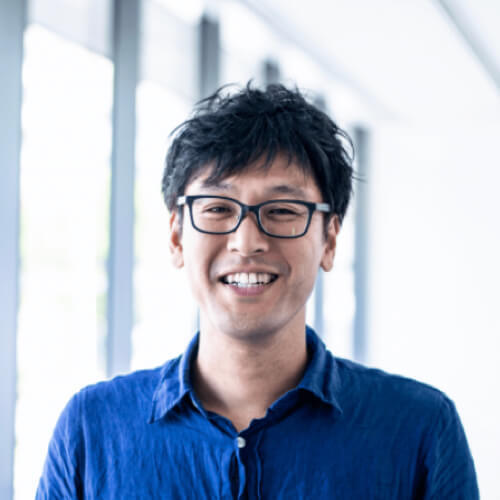
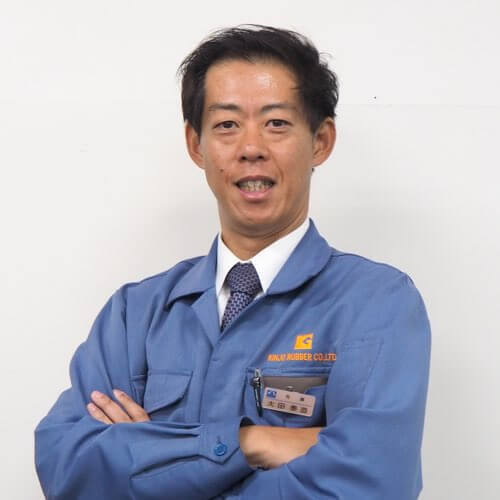
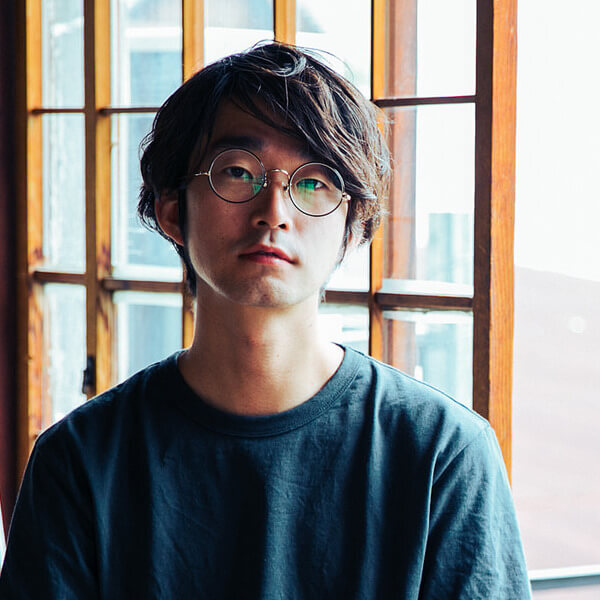
Affiliations and titles are as of the time of the project.
From B2B to B2C: The Key to Success Is Enjoying the Process of Making Things
Tsutsumi
To begin with, could you tell us why Kinjo Rubber—primarily a manufacturer of rubber products for BtoB clients—decided to participate in the YAOYA PROJECT?
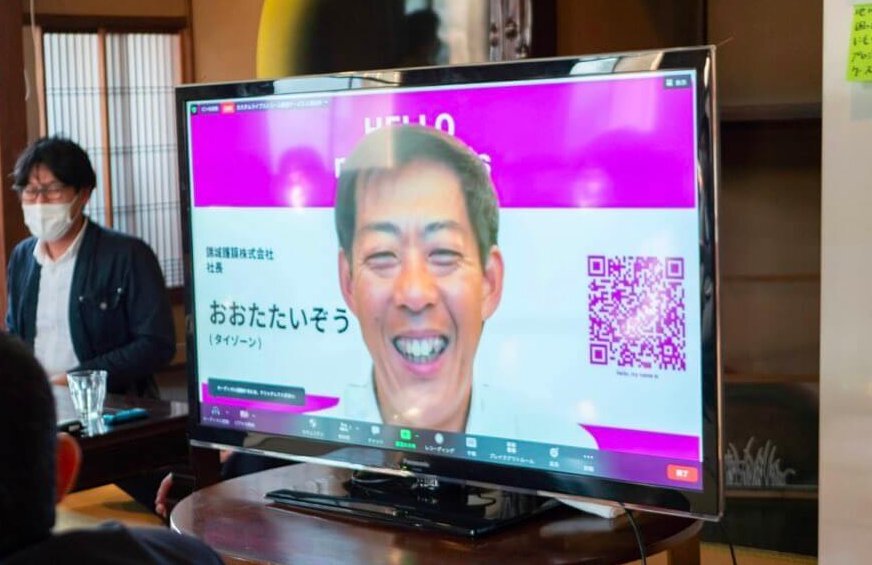
Ota
There were several reasons, but one was simply that we wanted to create new BtoC products and enter a new market. Another major reason was internal branding. For example, our company holds about a 50% share of the rubber gaskets used in the inner lids of rice cookers manufactured in Japan—but hardly anyone knows that. Even our factory employees don’t necessarily know what kinds of products the parts they make are used in, and they have no opportunity to see how end users respond to them.
In that context, we had long felt a desire to “let people know about our technology” and to “increase recognition of Kinjo Rubber not just as a behind-the-scenes supporter, but through original branded products.” When we heard about the YAOYA PROJECT from the City of Yao, we immediately thought, “We definitely want to do this,” and decided to participate.
Tsutsumi
So it was a timing when you were already thinking about taking on something new. There were four members from Kinjo Rubber participating in the YAOYA PROJECT—the largest number among the companies in the first year. How did you put the team together?
Taizo Ota, Kinjo Rubber Co., Ltd.(Honorifics omitted below)
When small and medium-sized companies like ours take on new initiatives, it often ends up being top-down—“The president wants to do this, so do it.” But I wanted our employees to see it as something personal and say, “I want to do this because I believe it’s worthwhile.” I felt that was essential if we were going to connect this effort to internal branding.
So I approached one of our core manufacturing members and said, “There’s an initiative called the YAOYA PROJECT. Why don’t you attend the briefing session, and if you’re interested, give it a try?” I then asked him to select the other project members as well.
In fact, in addition to our manufacturing business, we also operate a civil engineering business. We selected two members from manufacturing and two from civil engineering, making it a company-wide, cross-departmental project. Members who had only ever worked on commissioned projects before took on the challenge of creating something new through their own initiative, including managing people in a comprehensive way. That was extremely valuable for us as a company, and I see it as a real turning point.
Yasuki Matsuo(Honorifics omitted below)
There was someone on the project team who cared about Kinjo Rubber almost as much as President Ota did, and that person really drove the project forward. I think that’s why they were able to reach product completion in such a short time.
I told the four team members, “If you hit a wall that you absolutely can’t get past, come talk to me.” So when there were things they found difficult to say directly to the president, I would step in and relay those messages. I understood that in manufacturing companies, it’s important to carefully manage the balance between the roles of the president and the employees.
Tsutsumi
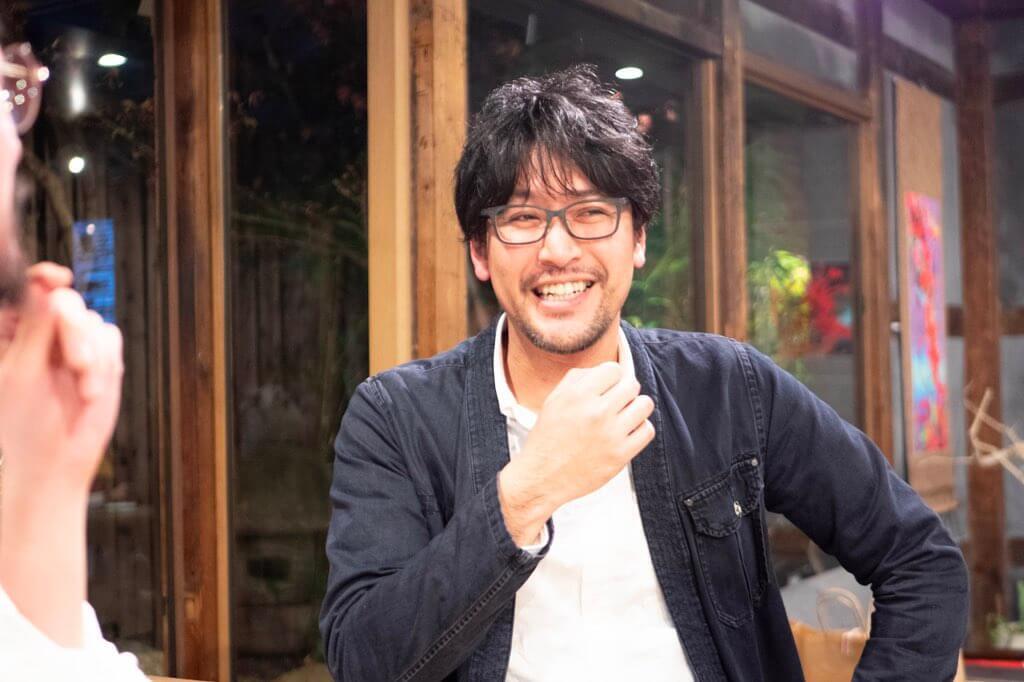
I felt that Kinjo Rubber was the company that enjoyed the YAOYA PROJECT the most. There was absolutely no sense that the members were being forced to do it. They were genuinely enjoying the act of making things, and their desire to “create” and “bring ideas into form” was clearly reflected in their actions. That was exactly the kind of scene we had hoped to see through the YAOYA PROJECT.
The Importance of Bringing an Outside Perspective into Manufacturing
Matsuo
Come to think of it, I remember receiving a mock-up of the silicone rock glass (product name: KINJO JAPAN E1, hereafter E1) and using it myself for two or three weeks before giving feedback. I asked things like, “Is it okay to put this in the dishwasher?” and “Can I use it in the microwave?” and the response was, “It’s silicone, so it’s totally fine,” as if it were obvious.
But that’s actually amazing, isn’t it? It looks exactly like a glass tumbler, yet you can use it that way. I told them, “This is a real strength-you should definitely highlight it.”
Tsutsumi
When you’re on the inside, things feel so obvious that you don’t even notice them. There are qualities you can only recognize when you look at a product from the outside.
Matsuo
Also, manufacturing companies tend to show only the finished product to the outside world. They rarely try to communicate the process of making it. But today, empathy and building a fan base are incredibly important. When people support and root for a product as it’s being made, it gains depth and character, and voices saying “I can’t wait to get it!” become the driving force behind the project.
By letting people around them see the process, building empathy, and repeatedly refining the product based on that feedback, they were able to continuously brush it up.

Tsutsumi
Lately, I’ve been thinking that having a clear deadline is actually a good thing for projects. You have to get it done by a certain point. When you try to take on something new on top of your regular work, it tends to drop in priority and drag on. Another good aspect of the YAOYA PROJECT was that there were eight companies participating at the same time-seeing what others were doing became a great source of motivation.
Matsuo
You were known as a tough mentor among the companies-but also a popular one (laughs).
Tsutsumi
In the second year, 2020, we started mentoring companies in pairs. That naturally made them more aware of each other’s progress, sped up execution, and encouraged them to exchange ideas like, “Why don’t you try this?” It really helped foster initiative.
Matsuo
What’s interesting about the YAOYA PROJECT is that, although everyone is involved in manufacturing, the participating companies come from a wide variety of industries-just like a “yaoya” (greengrocer). If this were a town built around a single industry, like tableware in Tsubame-Sanjo or cutlery in Sakai, I think the project would have been much harder. Because everyone was making completely different products, they were able to open up about their technologies and share with one another.
Tsutsumi
Designing projects that match the characteristics of each city is really important. Ota, looking back, was there anything you felt didn’t go well in the YAOYA PROJECT?
Ota
This is something I regret personally, but because the project was short-term, we weren’t able to fully build internal understanding or awareness within the company. We couldn’t completely get rid of the feeling among some employees that “something’s happening over there, but it doesn’t really concern me.” The four team members enjoyed the process and created a great product, so that part was positive-but I do wish we had been able to involve more people internally.
Matsuo
From my perspective, one thing we could have handled better was how, at the beginning, both the creators and the manufacturing companies were being overly cautious with each other. That led to having to remake the molds several times.
Ota
That’s true-we did redo the molds many times. It wasn’t so much hesitation as not fully understanding each other’s capabilities. As we progressed, we started thinking, “If we can do this much, then let’s push it further,” and kept upgrading the product. Eventually, that led to the terrifying situation of remaking the mold while the crowdfunding campaign was already underway... (laughs wryly)
Matsuo
Learning from that, in the second year we decided to make sure creators understood the factories better. We added factory tours at the matching stage between creators and companies. There’s no single correct answer-it was our first time running a project like this as well. I think what matters is continuously tuning and improving it, with the mindset of making it better each time it’s repeated.
The key to the project’s success: not deciding the goal in advance
Ota
In this way, with the support of Matsuo, Tsutsumi, and everyone at Loftwork, we were able to keep moving forward. What we realized by participating in the YAOYA PROJECT was the importance of just trying things first.
Manufacturing companies are made up of engineers, so we tend to calculate the goal in advance. By looking too far ahead, we end up thinking, “There’s no way this will work,” or “This won’t be cost-effective,” and we stop ourselves from taking action.
This time, we removed those mental constraints and shared a common understanding: “Let’s just try it first. No one knows the goal, and there is no single correct answer. Even if we fail, the experience we gain along the way will remain.”
Being able to adopt that mindset was a major turning point for our company.
Matsuo
You fell right into our trap(laughs). What matters is getting companies into a state where they genuinely enjoy taking on challenges. As someone working in government, I’ve been doing exactly that for the past eight years. And sometimes, people really do perform best when they’re pushed a little.

Ota
I absolutely agree. When there’s a customer and a fixed delivery date, you simply have no choice but to get it done.
Matsuo
Even though they’re professionals in manufacturing, when it comes to BtoC for the first time, there were so many things to worry about—how to package the product, the need to quickly launch a website, and so on. There was a lot of pressure. But all of that becomes experience. Unless you overcome those hurdles, a BtoB company can never truly move into BtoC. Our role was to collectively step in—sometimes a bit too much—to make sure things didn’t end in a major failure and to guide the project toward success.
While the product itself wasn’t made by Yao City, it was born out of a Yao City project, so we could present it as such. In that sense, I think it became a very solid example of an industrial promotion initiative led by a local government.
Matsuo
Above all, it’s crucial to just try things and gain a sense of success. To make that happen, it was important for me and everyone at Loftwork to come together and create an atmosphere where people could genuinely enjoy manufacturing. Going to Taiwan in the first year was a particularly good decision. That experience helped everyone realize that you can’t create things just by thinking about them. You have to work with your hands, show your work to others, and refine it step by step.
If this mindset shift allows companies to experience success, they can eventually move forward on their own even without a project like this. Being able to nurture even one such company in the first year is, I believe, proof that YAOYA PROJECT was a success.
Tsutsumi
I’ve heard that YAOYA PROJECT has become a catalyst for new initiatives at Kinjo Rubber as well.
Ota
That’s true -we’ve been completely “brainwashed” and started running on our own(laughs). Younger employees have begun saying, “I want to try it too,” and beyond E1, we’ve already started developing other BtoC products. On top of that, collaborations with other local companies -like Osaka Toka in Yao City- are steadily expanding.
Tsutsumi
That’s a really great momentum. A project is ultimately just a trigger-a passing point. What truly matters is building a system that allows initiatives to continue, and nurturing the mindset that has taken root within the company. For a company to keep going, it has to keep asking: what is necessary, what should we create next, and what comes after success? I don’t think there’s ever a point of “completion.” By practicing, failing, and learning step by step, a company’s brand gradually takes shape-almost like a sculpture being carved over time.
Related projects
Like the YAOYA PROJECT introduced here, AWRD provides many platforms for co-creation where companies and regions can bring their technologies and ideas into society.
We invite you to explore similar initiatives and learn more about how AWRD services can be utilized.
View other co-creation and new business project case studies
Browse the full list of AWRD case studies
How co-creation and design can be leveraged with AWRD
Learn more about AWRD services and use cases
AWRD is an open call platform for co-creation where companies, local governments, and creators collaborate on diverse themes.
By inviting projects and talent from around the world, it enables initiatives in business development, community co-creation, and startup support through open innovation.
From project design to operational support, AWRD accompanies initiatives every step of the way, fostering co-creation that opens up value to society.