A Traveling Circular Exhibition Across Three Cities – crQlr Awards Exhibition
The crQlr Awards 2024 is a global award program that invites projects and ideas promoting the advancement of a circular economy. In its fourth edition, the award received entries from 143 projects across 47 countries, including services and business initiatives. Selected projects received unique awards and evaluation comments from ten judges. Additionally, some of the winning works—including the recipients of the Special Prizes—were presented during the crQlr Awards Exhibition 2025, which toured FabCafe locations in Tokyo, Osaka, and Nagoya from spring to fall 2025.
Rather than merely celebrating achievements, the crQlr Awards serves as a practical platform that proposes diverse approaches toward building a future circular society and economy. By visualizing and reconnecting circular design practices from around the world, the exhibition aimed to create opportunities for individuals from various fields—local creators, students, and business representatives—to meet and engage in conversation.
This report highlights the exhibitions held in all three cities.
Exhibition Schedule
FabCafe Tokyo:March 6 (Thu) – March 26 (Wed), 2025
FabCafe Kyoto:April 29 (Tue, Holiday) – May 31 (Sat), 2025
Kankyo Day Nagoya 2025:September 13 (Sat), 2025
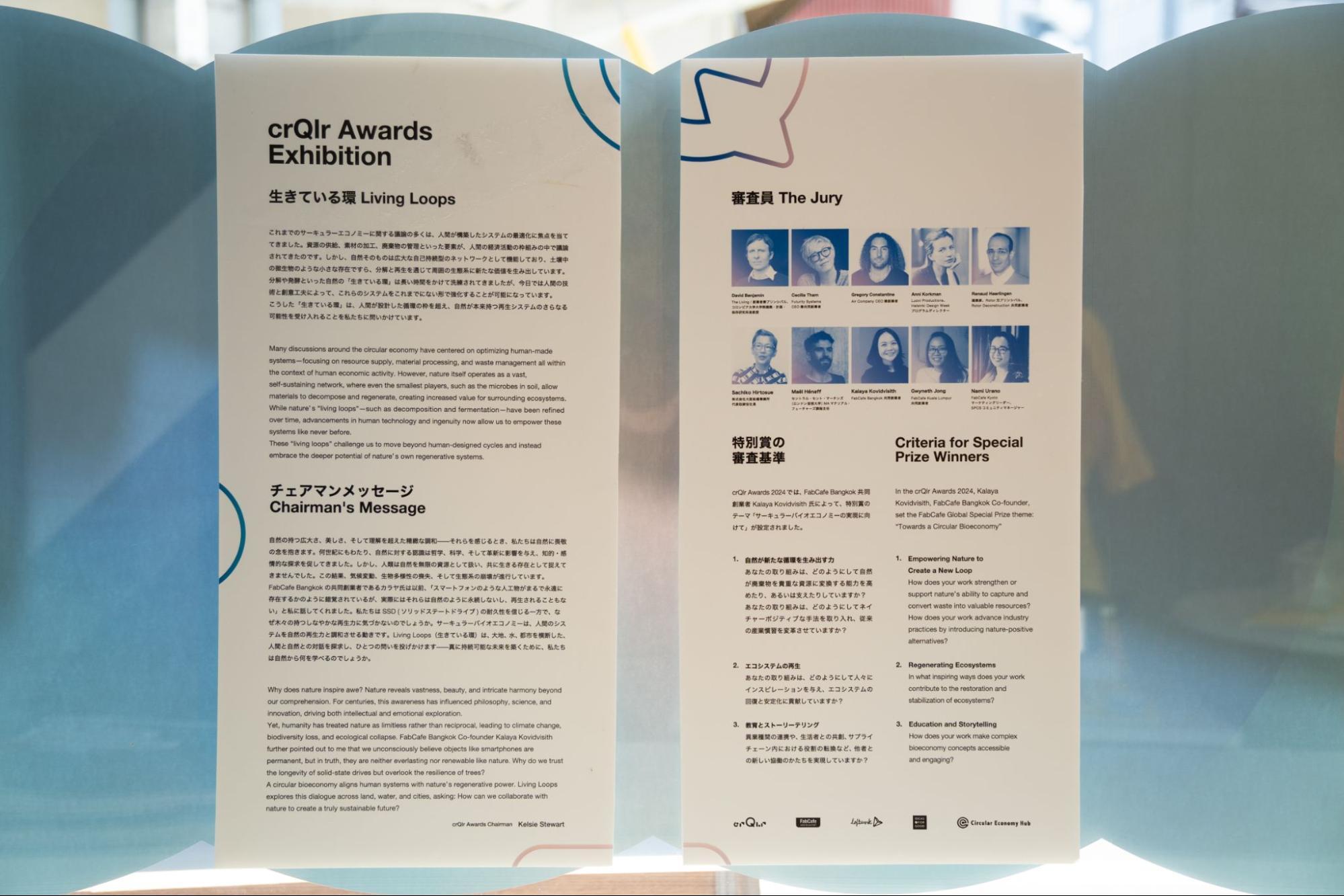
crQlr Awards Exhibition Tokyo — “Living Loops”
The shared theme of the touring exhibition was “Living Loops.”Opening at FabCafe Tokyo, the exhibition focused on the intersection of nature and technology, spotlighting three Special Prize–winning projects that advance the circular bioeconomy. Alongside these works, a lineup of cutting-edge projects that are shaping the future of circular design captured the attention of many visitors.
*Special Prize winners are granted the opportunity to exhibit and present their projects at FabCafe as part of the award benefits.
Special Prize:Bioluminescence illuminates the future of art and beyond
Bio-Moon Labb
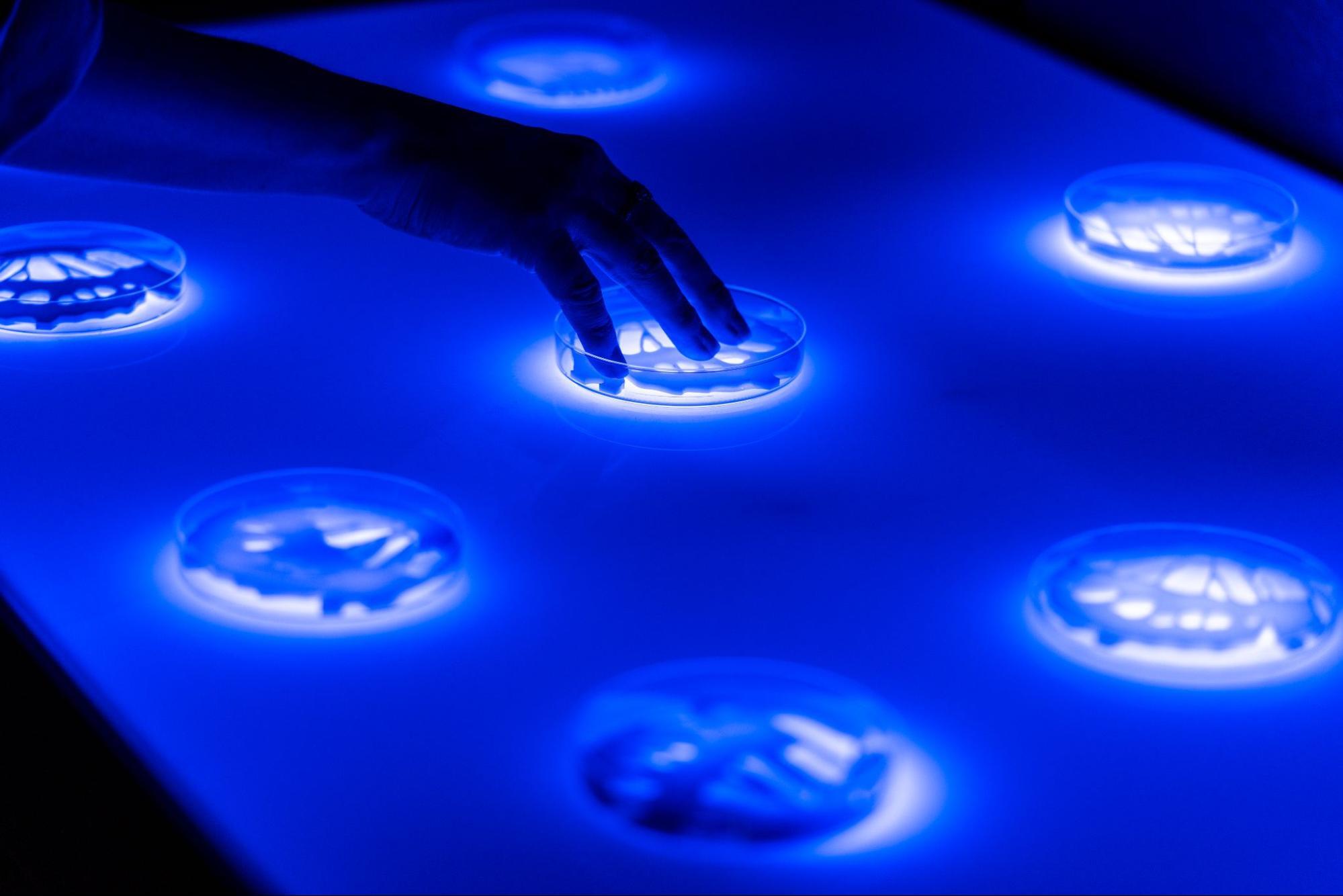
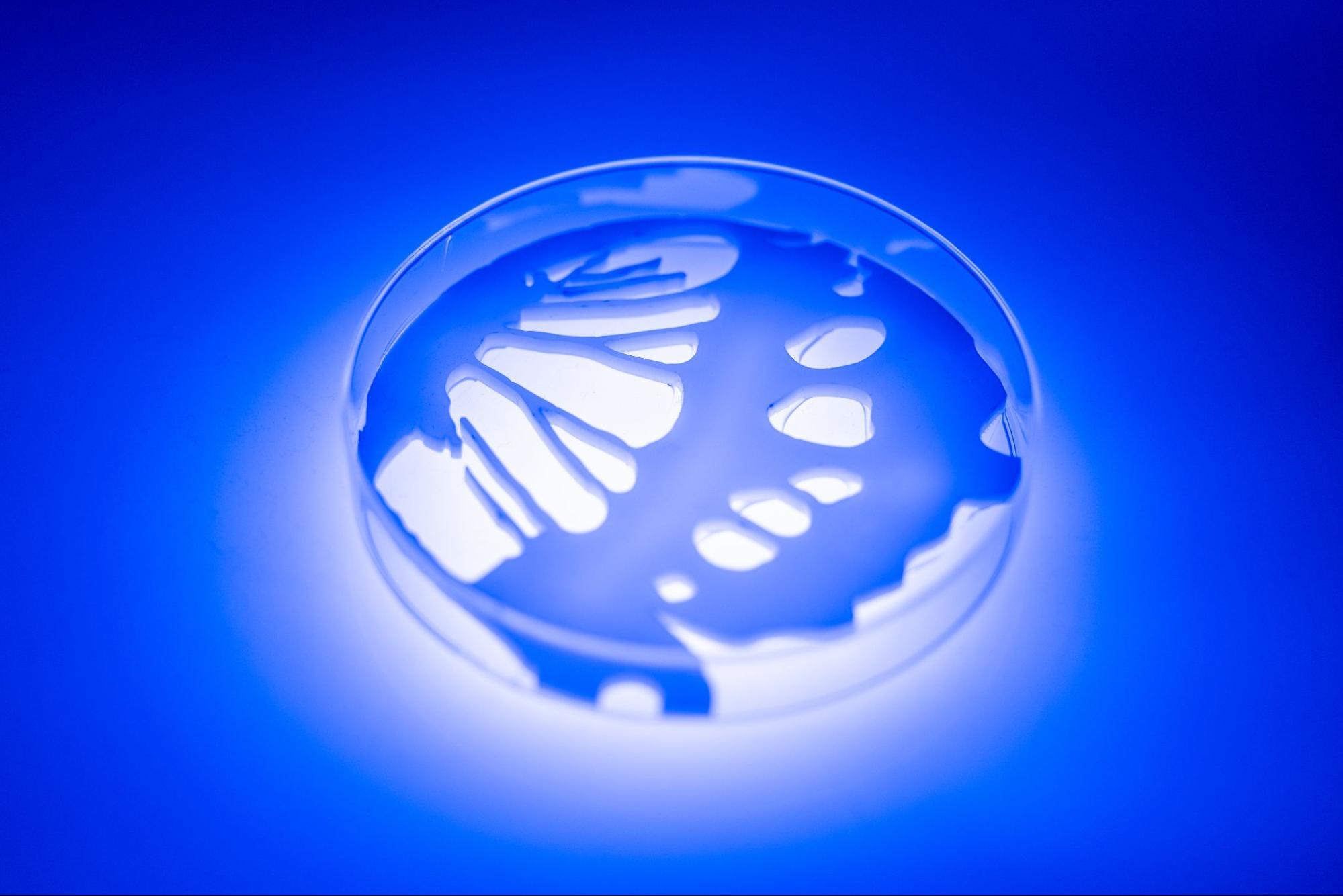
Approximately 80-90% of deep-sea creatures emit bioluminescence, with algae like dinoflagellates playing a key role in natural light production. Harnessing this phenomenon offers eco-friendly lighting alternatives while fostering a deeper connection to marine ecosystems.
Bio-Moon Lab is an interdisciplinary project fusing art, sustainability, and science to explore bioluminescence. By cultivating Vibrio Fischeri, a bacterium found globally in marine environments, the project aims to develop “Bio-light” as a sustainable alternative to artificial lighting, redefining illumination in contemporary art while promoting a harmonious relationship between technology and nature.
URL:https://crqlr.com/crqlr-awards/2024/winners/bio-moon-lab/
Special Prize:Cleaning with waste while challenging the status quo
Piss Soap
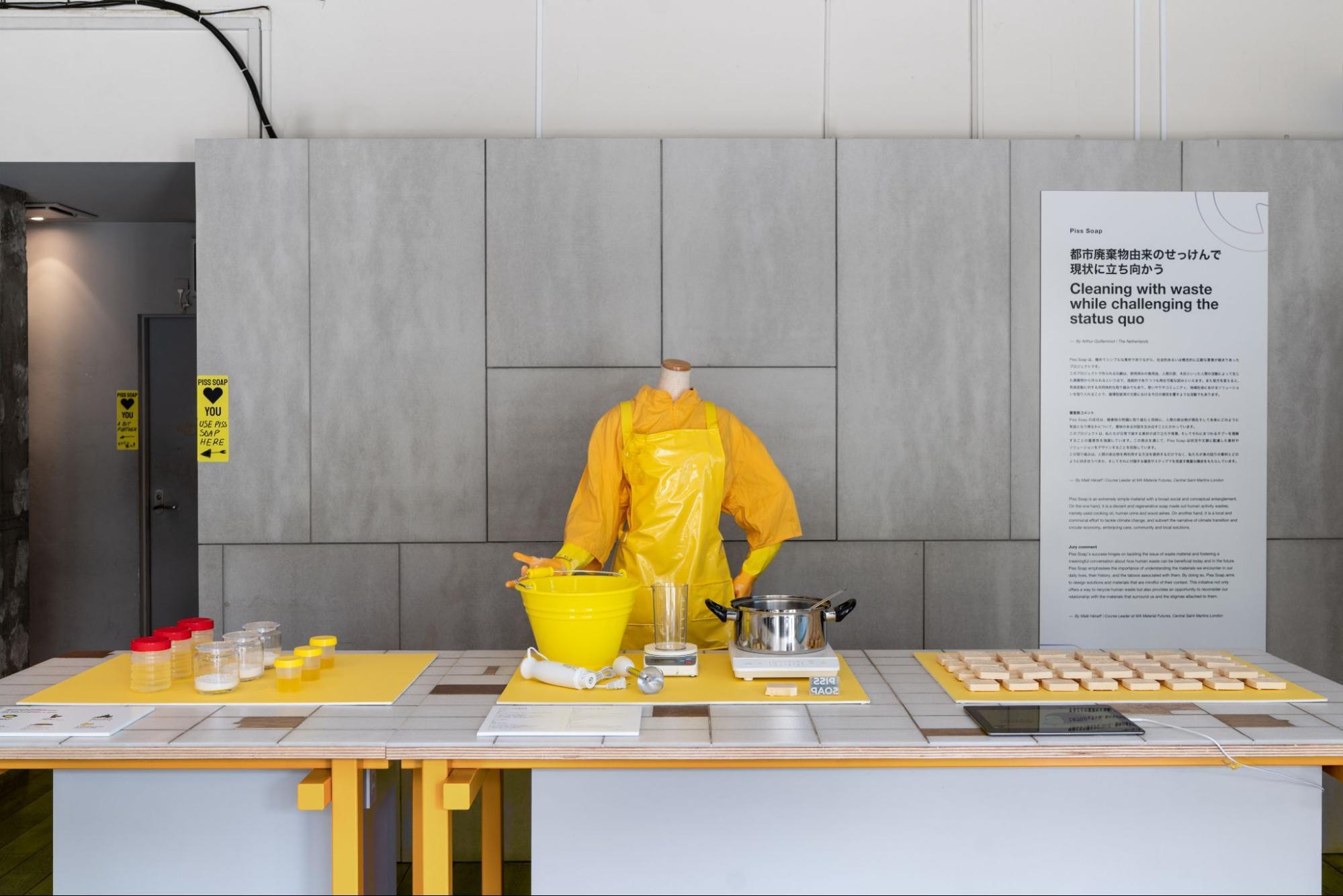
Piss Soap is an extremely simple material with a broad social and conceptual entanglement. On the one hand, it is a deviant and regenerative soap made out human activity wastes, namely used cooking oil, human urine and wood ashes. On another hand, it is a local and communal effort to tackle climate change, and subvert the narrative of climate transition and circular economy, embracing care, community and local solutions.
URL:https://crqlr.com/crqlr-awards/2024/winners/piss-soap/

Special Prize: Can sensors be designed to disappear like fallen leaves?
“Return to the soil” circular sensors
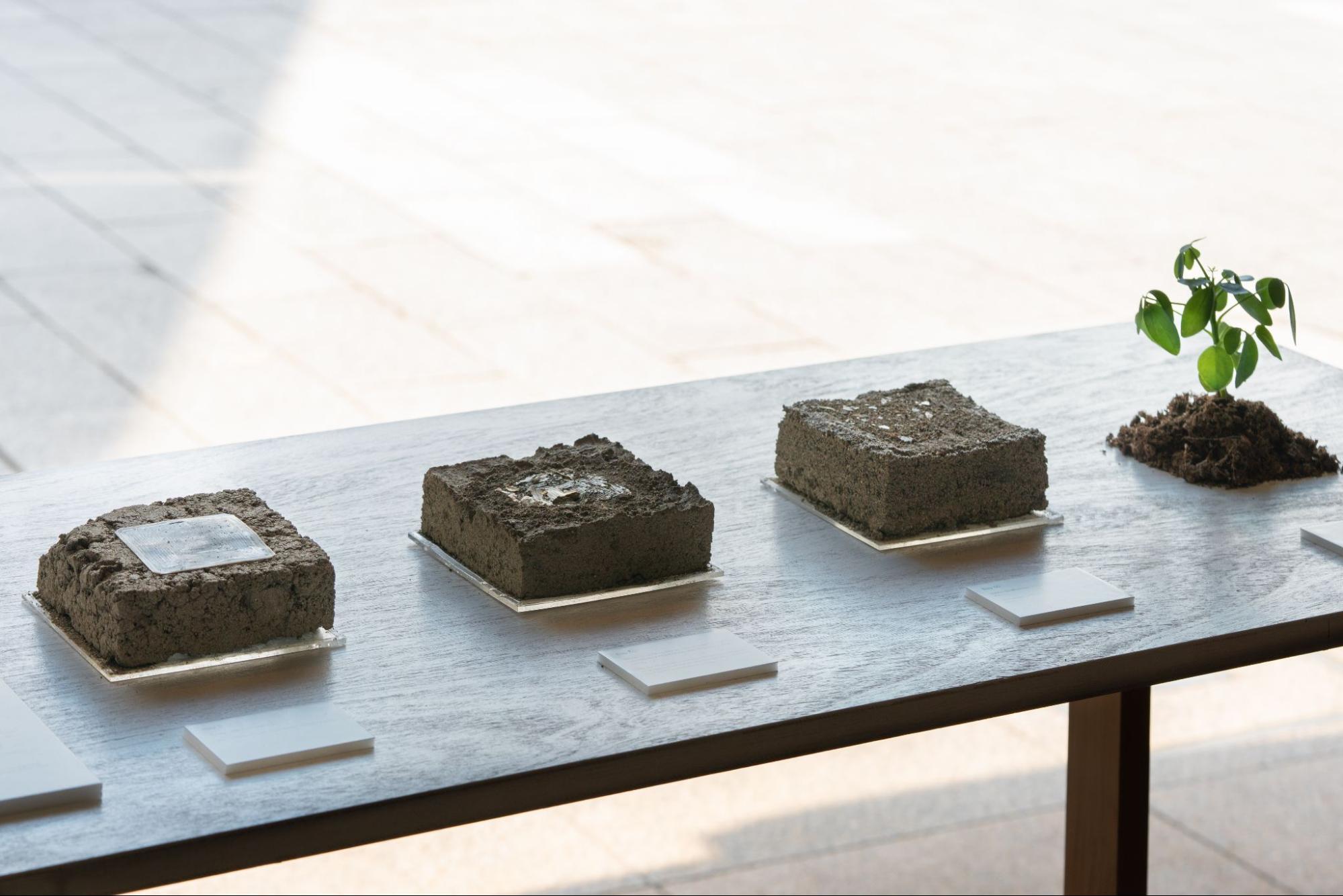
The collection of environmental data, such as temperature, humidity, and soil moisture, is essential for activities like agriculture and urban management. However, the dense installation of sensors can lead to environmental harm. This project aims to create “return to the soil” circular sensors using plant fibers, soil components, and natural oils. These sensors will circulate naturally in the ecosystem, just like fallen leaves. Prototypes of humidity and soil moisture sensors have been developed, and these biodegradable sensors will eventually decompose, returning to the earth through natural processes.
URL:https://crqlr.com/crqlr-awards/2024/winners/return-to-the-soil-circular-sensors/

In addition to the exhibition, FabCafe Tokyo hosted an inspirational talk and networking event on March 8 (Sat), 2025, featuring judges and award-winners discussing pathways to realizing a circular bioeconomy. The venue buzzed with lively discussion and passionate exchanges.
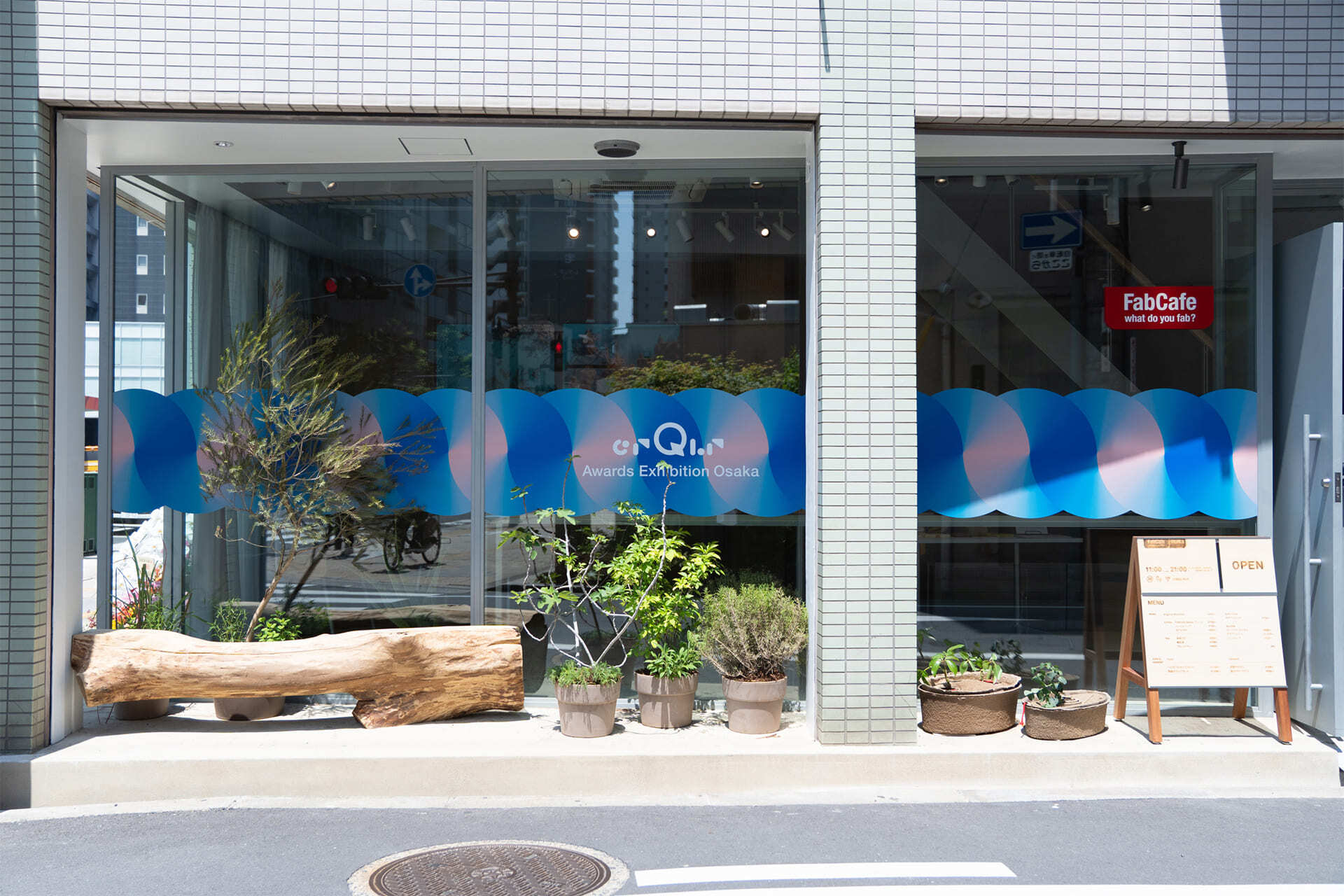
crQlr Awards Exhibition Osaka
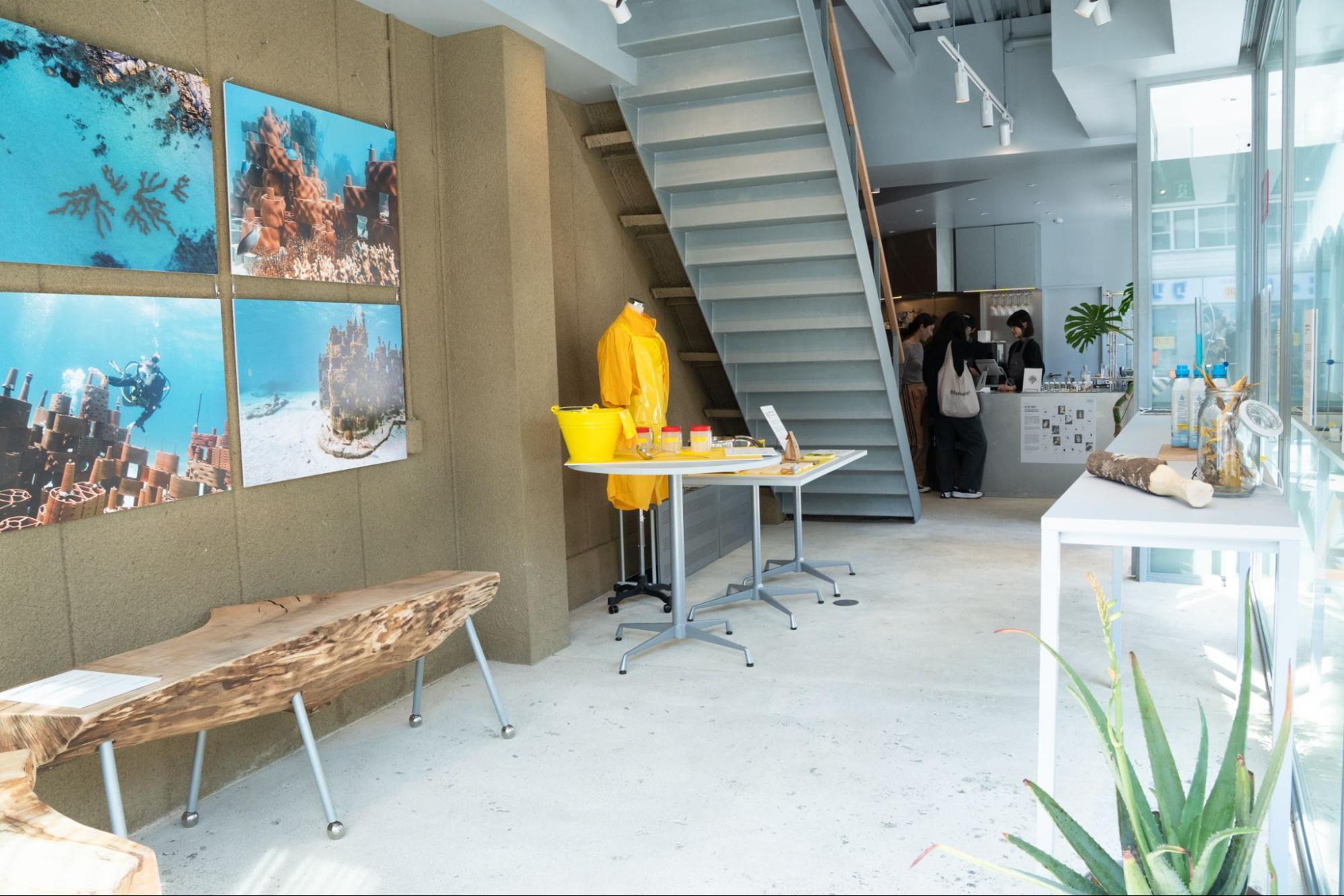
At FabCafe Osaka, the focus shifted to circular projects embedded in everyday life. In addition to the Special Prize–winning works, past award-winning projects were also showcased, offering visitors an approachable perspective on engaging with a circular society.
FabCafe Osaka, which had just opened in 2025, connected with many visitors through the exhibition, demonstrating its potential to become a hub for future community-building and co-creation.
2021 Winner: Giving Used Cooking Oil a Second Life
SOUJI
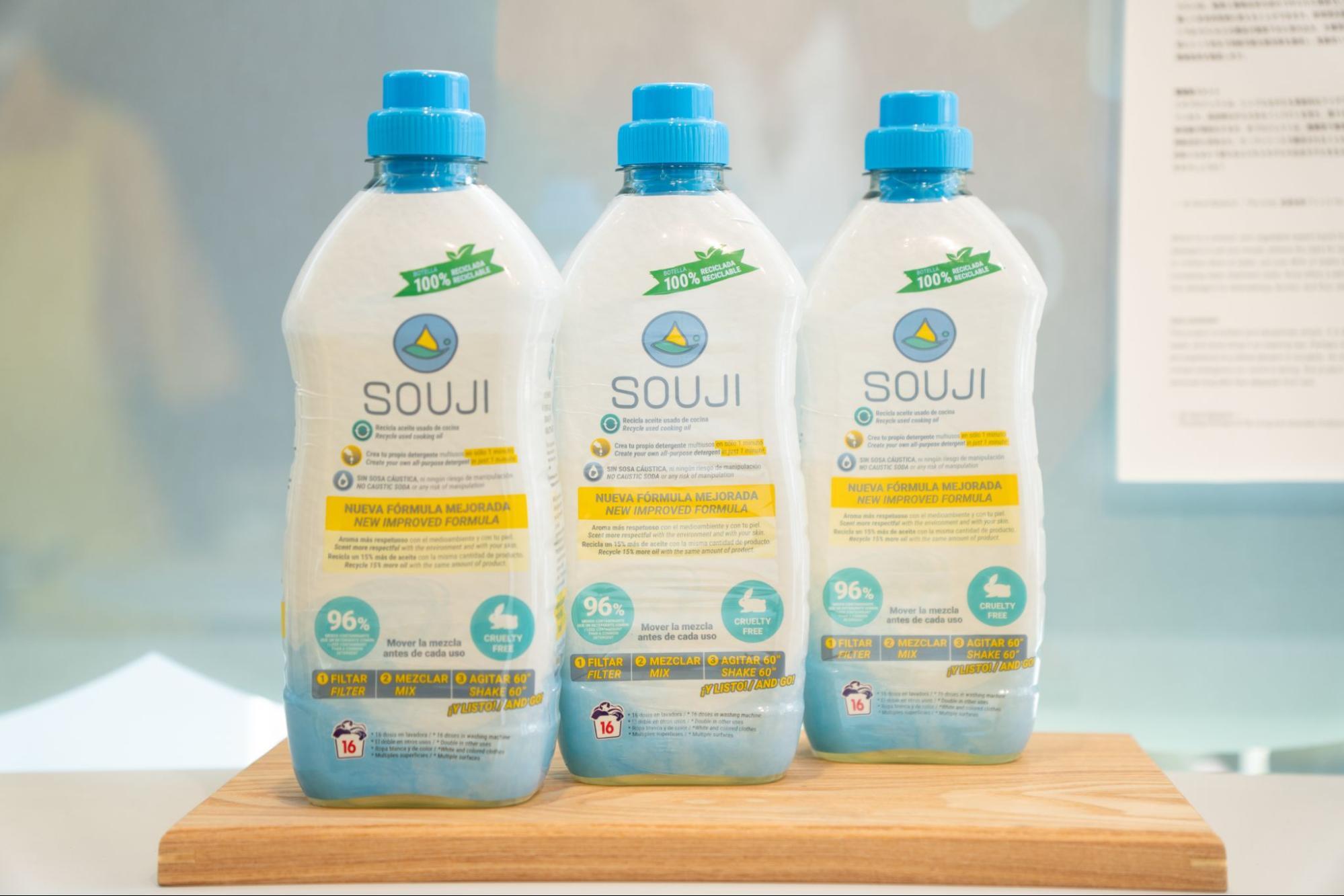
SOUJI is a mineral- and plant-derived liquid that transforms used cooking oil into an environmentally friendly multipurpose detergent in just one minute—without caustic soda or harmful substances.
One liter of used cooking oil can contaminate up to one million liters of water. In Spain, more than 60% of waste oil flows directly into sewage systems, damaging ecosystems and increasing wastewater treatment costs.
SOUJI offers a safe, sustainable solution for households and businesses, recycling used oil into detergents for dishwashing, laundry, and floor cleaning—reducing pollution, plastic waste, and environmental burden.
URL:https://crqlr.com/crqlr-awards/2021/winners/2021_36_souji/
2024 Winner:The Akasango reef, an homage to the Japanese Red Coral
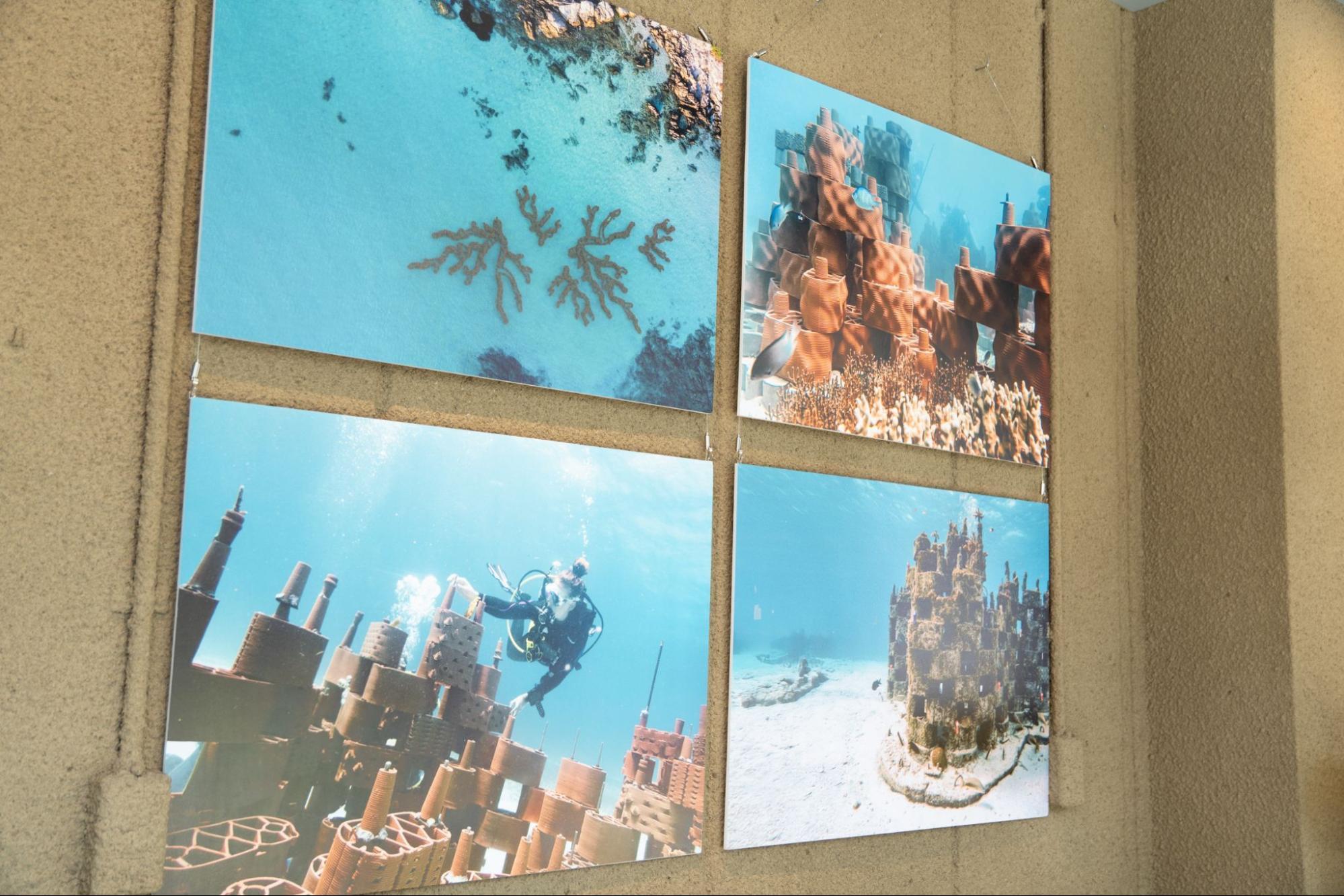
The rrreef project aims to revive 1% of coastal coral reefs by 2034, restoring marine biodiversity for healthier oceans and communities. As spin-off companies of ETH Zurich, rrreefs combines Swiss innovation, 3D-printing technology, science, and art to create modular clay reef structures that regenerate coral reefs and restore fish habitats. Since 2021, they have rehabilitate coral reefs across different oceans, collaborating with local communities to monitor biodiversity and validate their impact
Their Akasango Reef project envisions a 200m² restoration off Okinawa, where reefs are under threat. Inspired by the red coral (Corallium japonicum), once prized for art and jewelry but now nearly extinct, this project aims to revive marine ecosystems while honoring Japan’s cultural heritage.
URL:https://crqlr.com/crqlr-awards/2024/winners/the-akasango-reef-an-homage-to-the-japanese-red-coral/
2022 Special Prize:Exploring, preserving, and transforming Japan's satoyama edible plants
Nihon Kusaki Lab
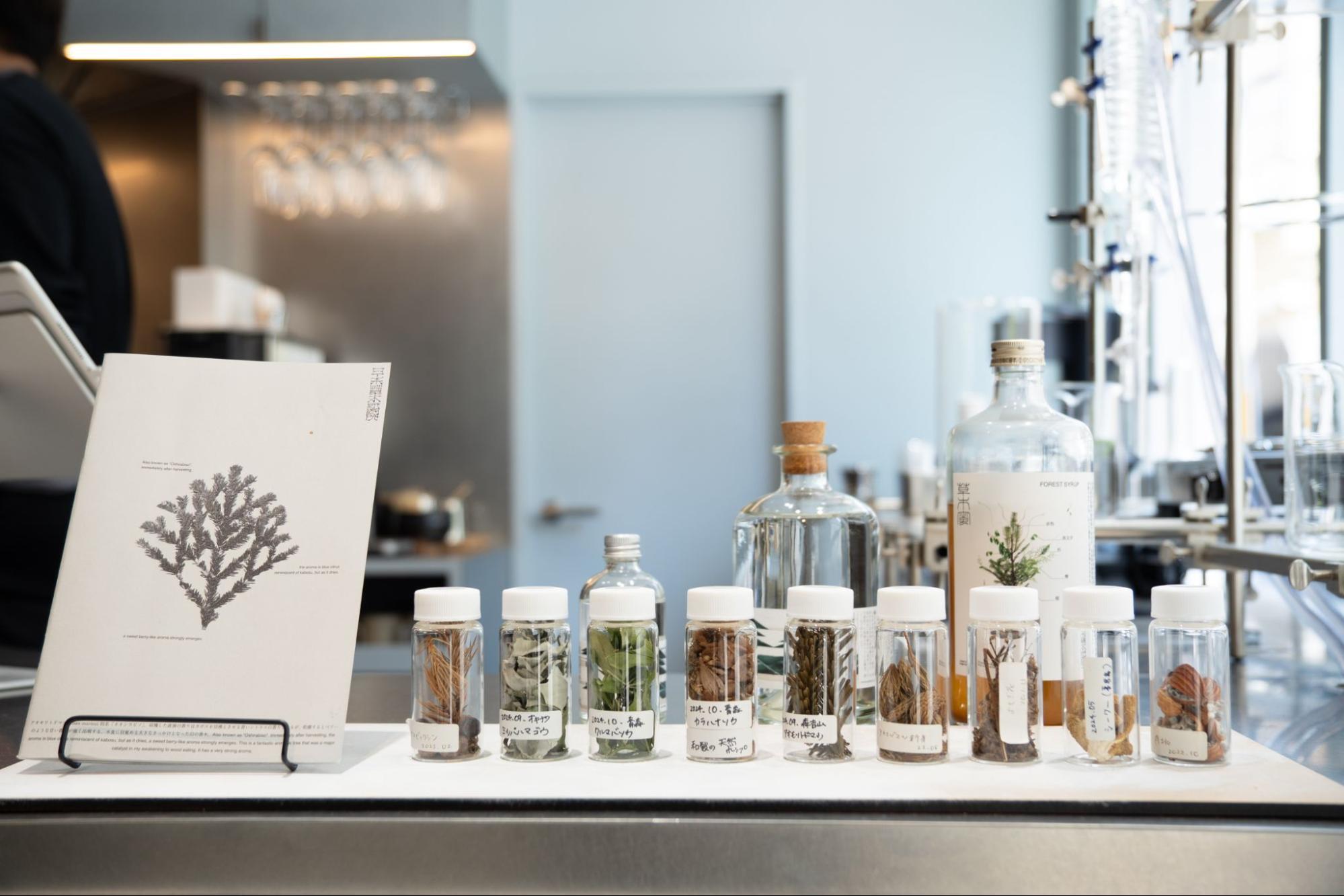
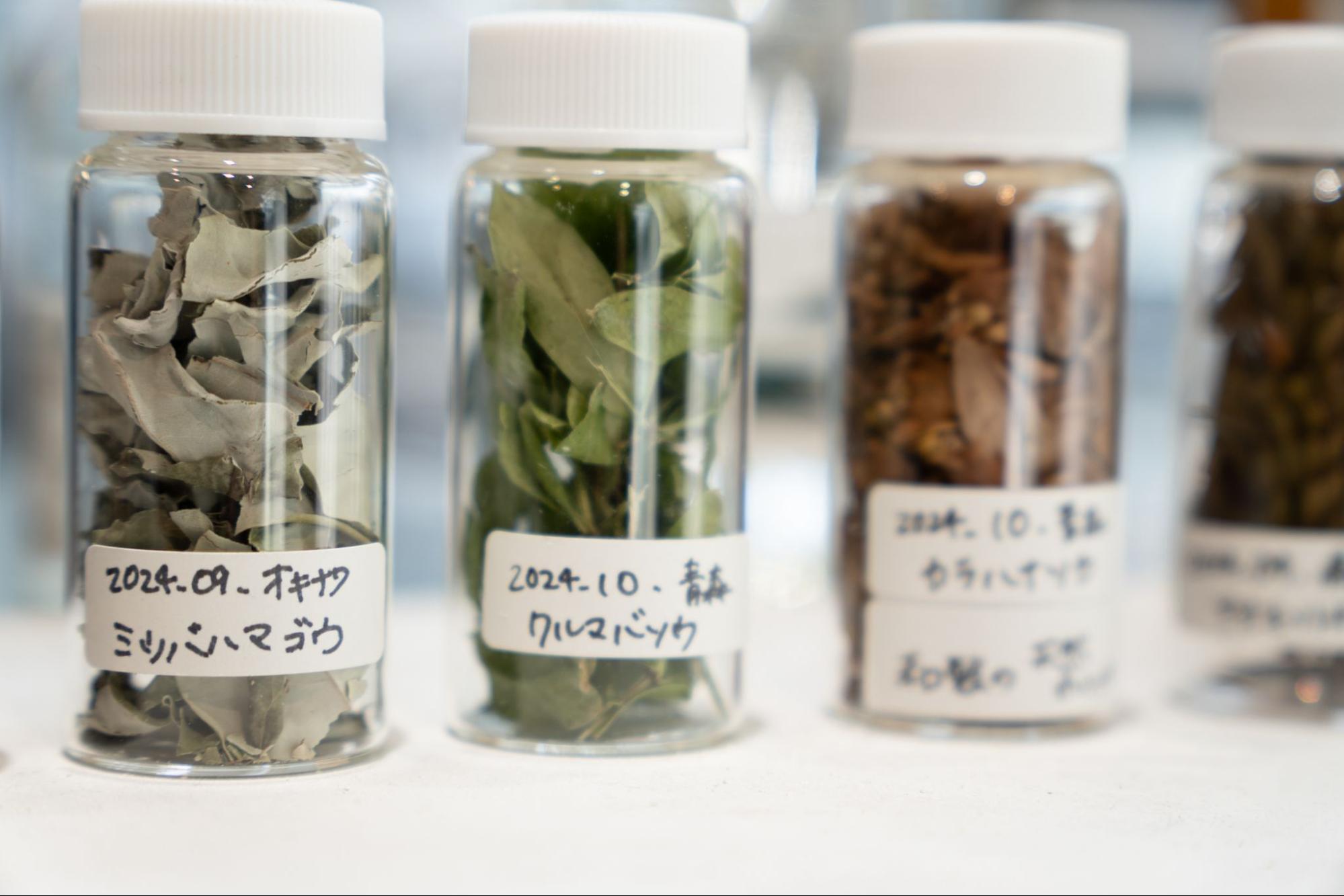
The Japan Plant and Vegetation Research Institute (J-PRI) explores the potential of Japan's satoyama vegetation to make native plants a natural part of our dining and living environment. Partnering with mountains across Japan, J-PRI promotes the use of indigenous edible plants, supporting local industries, sustainable food supplies, and global competitiveness. Nihon Kusaki Lab, a key initiative, redefines mountain plant resources traditionally seen as building materials, transforming them into food products like gin, syrups, and salt. By highlighting plants such as futoukazura peppercorns, nikkei cinnamon, and kuromoji spicebush, J-PRI showcases the untapped culinary value of Japan's native flora.
URL:https://crqlr.com/2022/winners/nihon-kusaki-lab/
crQlr Awards Exhibition Nagoya
FabCafe Nagoya brought the exhibition outdoors to Kankyo Day Nagoya 2025, introducing circular projects—including Piss Soap, SOJIi, and Nihon Kusaki Laboratory—to environmentally conscious citizens, companies, and students.
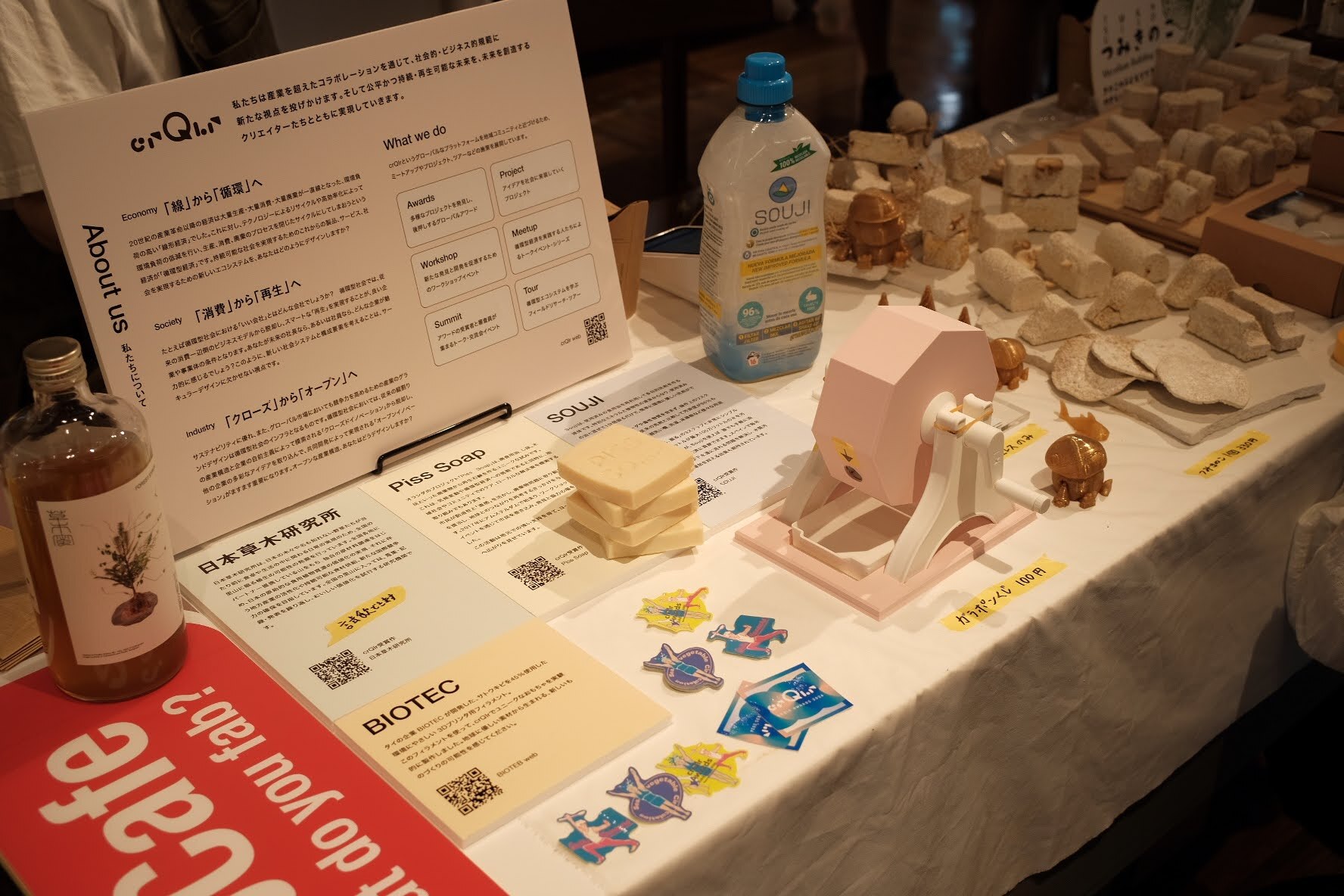
Scenes from the Exhibition at “Kankyo Day Nagoya 2025”
More details can be found here:https://note.com/fabcafe_nagoya/n/n21b5a5cccab8
From Awards to a Growing Ecosystem of Circularity
For many visitors, encountering these award-winning projects may have provided the spark needed to begin their own circular practices. This “Know → Empathize → Participate” cycle represents the very future that the crQlr initiative aims to foster.
We look forward to expanding these activities even beyond the framework of the awards.
Links
crQlr: https://crqlr.com/
crQlr Official Instagram: https://www.instagram.com/crqlr_awards/
crQlr Awards 2024: https://awrd.com/en/award/crqlr-2024