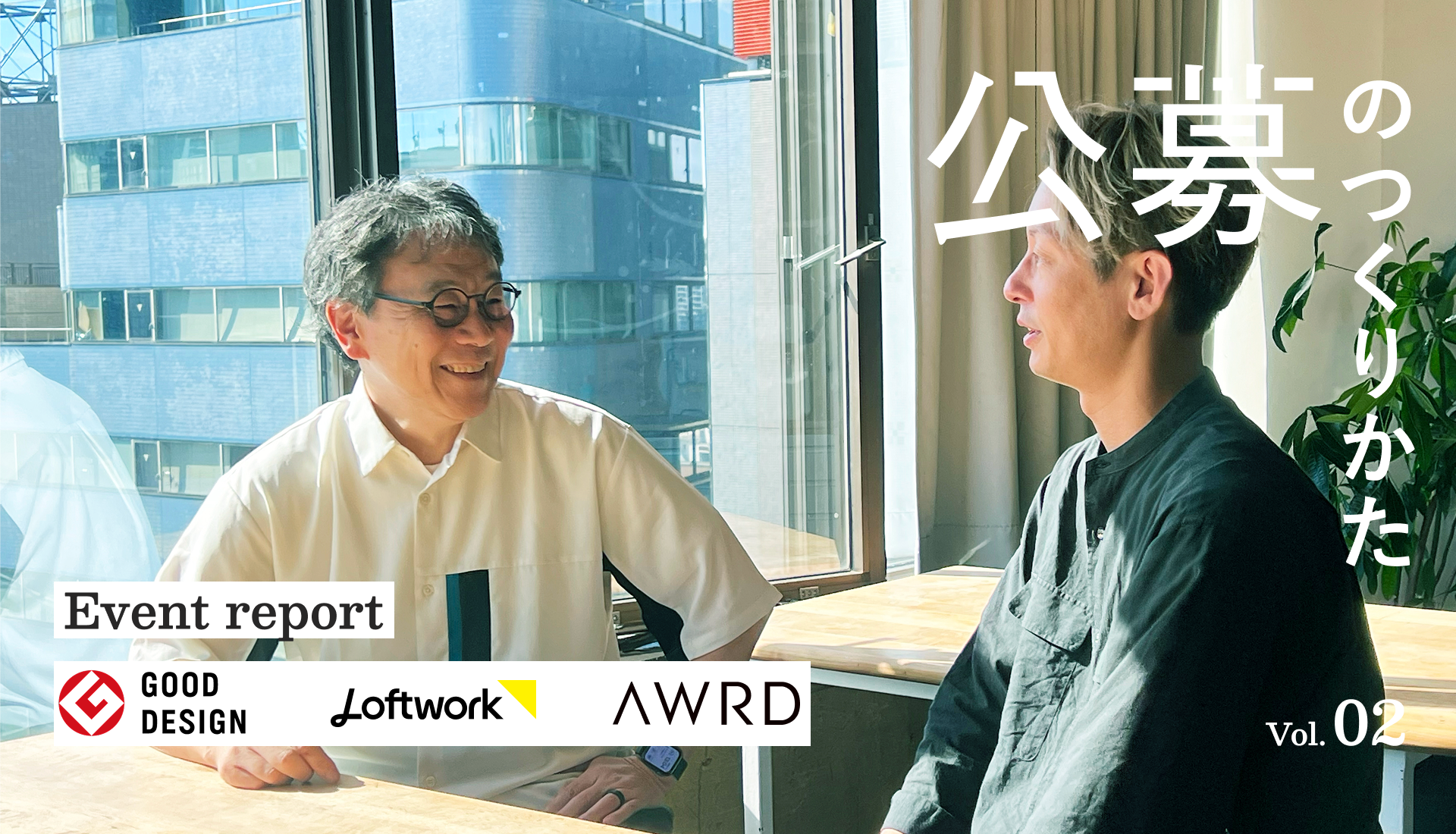
“How to Design a Competition” is an event series that explores the experiences and insights of professionals involved in organizing open competitions and awards through public interviews. The guest for the second session was Shinji Yajima, Executive Director of the Japan Institute of Design Promotion (JDP).
Established in 1957, the Good Design Award celebrated its 70th edition in 2026. Beyond products and architecture, the award recognizes a broad range of design, including services, systems, and initiatives. It embraces a wide definition of design as “things people have created or conceived to achieve certain ideals or purposes,” evaluating the value they bring to society.
With such a long history, how has the Good Design Award adapted to changes in society and design while continuously refining its approach to recognizing good design? In this session, AWRD Producer Kazuhiko Asami spoke with Yajima about what makes a well-designed competition, how people with different perspectives and values approach evaluation, and the future of design and judging in the age of AI.
Note: In this article, the term “open competition” is used broadly to refer to various formats that invite proposals or submissions from the public.

Discovering Good Design and Sharing Its Value with Society: The Role of the Good Design Award
Yajima began by introducing the Good Design Award’s evaluation process and the latest results for 2026. A total of 5,111 entries were evaluated in the 2026 edition.
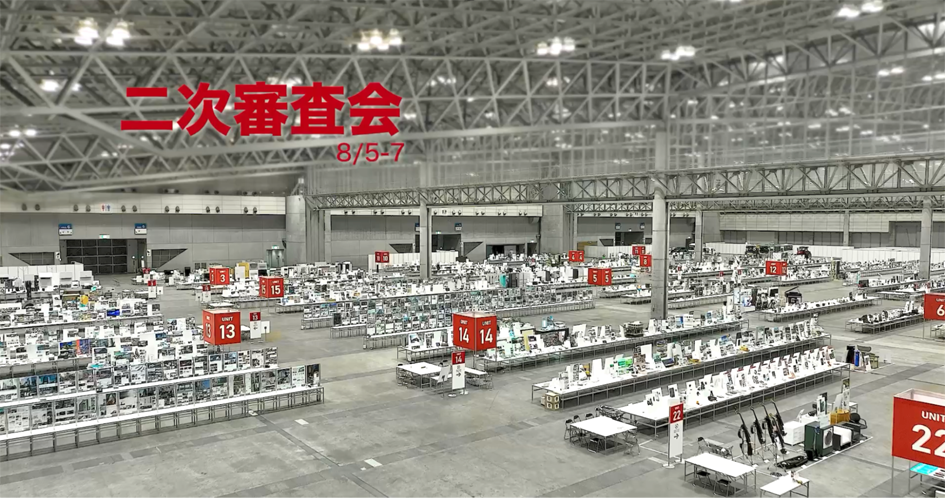
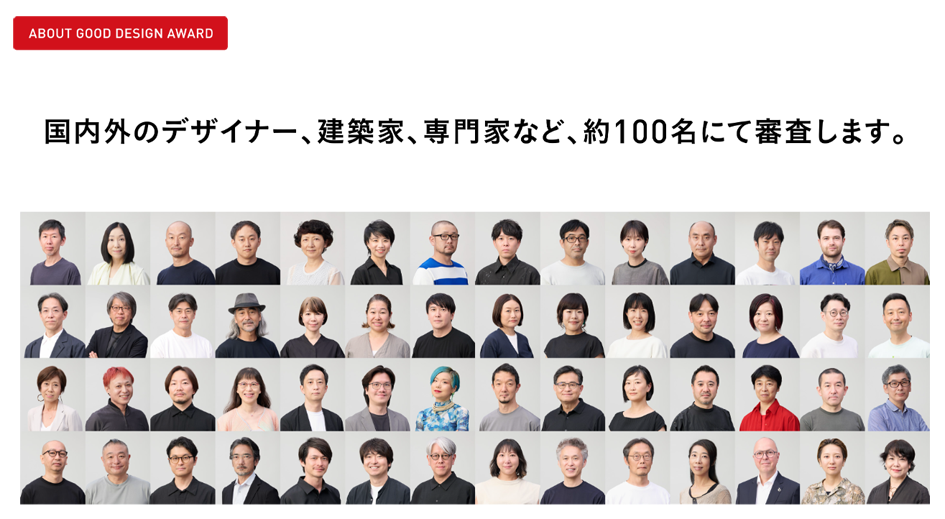
Approximately 100 judges from Japan and abroad, organized into 20 judging units, conducted the first and second rounds of evaluation. During the second round, the judges spent three days examining more than 4,000 entries, assessing each one individually through hands-on evaluation, written materials, and videos. Following this rigorous process, 1,484 entries from 1,032 companies and organizations were ultimately selected as award winners.
Despite the extensive evaluation process, the role of the Good Design Award goes beyond simply selecting outstanding designs.

— Shinji Yajima (hereafter, Yajima): At the Good Design Award, we ask our judges to identify what makes each entry outstanding and which aspects are worth learning from. We then document and share these insights. By communicating the qualities that have been recognized, we hope to inspire people both within the same industry and across different fields, providing ideas for future development. This cycle of “discovering value and giving it back to society” is an essential part of the Good Design Award’s mission.
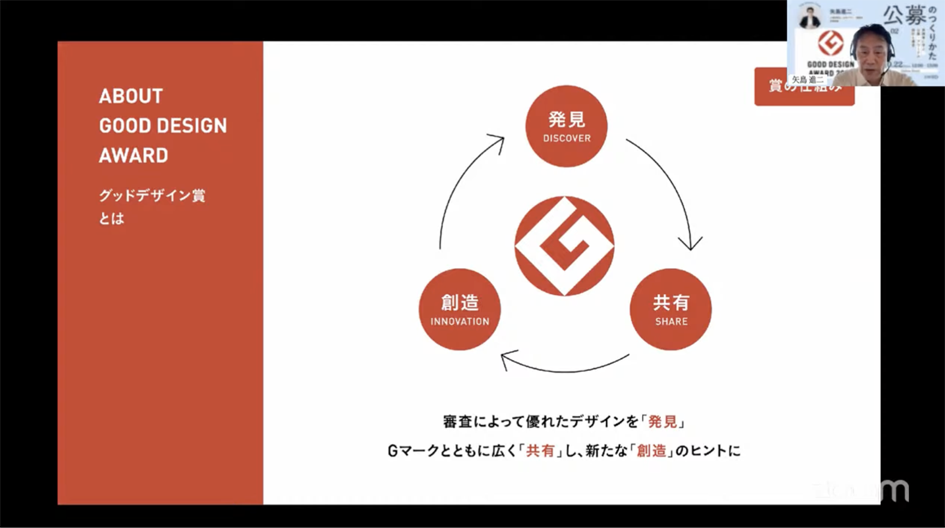
This cycle of “Discovery, Sharing, and Creation” is a core philosophy of the Good Design Award. Through the judging process, outstanding designs and their underlying value are “discovered” and then “shared” with society through the G Mark. The value communicated in this way becomes a source of inspiration for future product development and new forms of “creation.”
The Good Design Award sees its role as extending beyond selecting and recognizing outstanding designs. It aims to make the value it discovers accessible to society and to inspire the next generation of creative endeavors.
Each year, the Good Design Exhibition, also known as “G Exhibition,” brings together all award-winning entries in one place. According to Yajima, it is not simply an opportunity to view the year's winning designs, but also a place to gain insight into where manufacturers and society are heading, offering a snapshot of the current state of design and emerging trends.
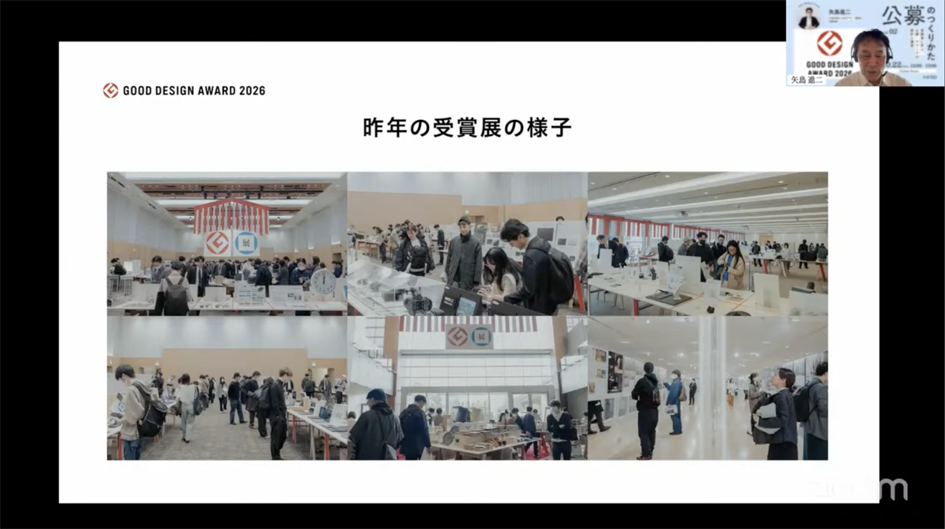
The Good Design Award’s activities demonstrate that an open competition is not only a means of selecting winners, but also a platform for communicating the value discovered through the process to society.
Why Are Open Competitions Still Needed Today?
In an era when social media and other platforms allow anyone to showcase their work and receive feedback from others, new open competitions continue to emerge across a wide range of fields.
— Kazuhiko Asami (hereafter, Asami): From the Good Design Award, now in its 70th edition, to the many other competitions held today, why do you think these systems continue to play an important role in society?
— Yajima: For organizers, I think one of the biggest motivations is the desire to discover new creative talent. For creators who enter, competitions can provide an opportunity to make their debut or take the next step in their careers. I believe competitions continue to grow in number because both sides recognize the value of these opportunities.
— Asami: We now live in an era when anyone can share their work, receive feedback, and even take on the role of evaluating others. Against this backdrop, has the social role of the Good Design Award also changed?
— Yajima: I actually think the value of being evaluated by an independent third party has increased. Such recognition is becoming increasingly important in various contexts, including recruitment and communication with shareholders. Third-party evaluations serve not only as a means of promoting products, but also as a way to communicate the value of companies and their activities to the outside world.
For both organizers and applicants, competitions can create opportunities to connect with people they might never otherwise have encountered and open up new possibilities to society. I believe that is one of the key reasons why open competitions remain relevant today.
Creating a Reason to Enter: What Makes a Well-Designed Open Competition?
— Asami: This may be a very difficult question, but what does it take to create a successful open competition, and how should it be designed?
— Yajima: I think one of the most important factors is giving people a compelling reason to participate. In particular, who will be judging their work, and who will have the opportunity to see it? Knowing that a particular person will review their work can be a powerful motivation. People might think, “If that person is going to see my work, I want to enter,” or “This is a challenge worth taking on.”
Beyond prize money, it is also important to build opportunities into the competition itself, such as product commercialization, the realization of architectural projects, or media exposure. In other words, participants need to see what opportunities and possibilities might emerge after they submit their work.
— Asami: So it's about creating reasons to participate, not just at the application stage, but also by considering what opportunities await participants afterward.
— Yajima: Exactly. It's important to design the competition with a clear plan for how the results and information will reach a wider audience. When a competition is structured to produce meaningful outcomes beyond the selection process, I believe it can become more sustainable over time.
Rather than simply collecting entries, selecting winners, and presenting awards, a well-designed competition considers what opportunities it can create for participants and where their work or ideas might lead. Thinking through these outcomes from the outset is essential to ensuring that a competition has a lasting impact rather than becoming a one-off event.
To sustain a competition over time, it is also essential to continually reconsider what constitutes “good” as society evolves. The Good Design Award has likewise adapted its evaluation perspectives and rules in response to changing times.
— Asami: On the other hand, is there anything that should never change?
— Yajima: I think it's extremely important to remain committed to the original purpose and vision of the competition without losing sight of them.
— Asami: So while our understanding of what makes something “good” changes over time, and evaluation criteria need to evolve accordingly, the fundamental purpose should remain consistent.
— Yajima: I agree. What we consider “good,” as well as the scope and perspectives of evaluation, continues to expand with the times. Take electronic devices, for example. Today, we can no longer evaluate them based solely on their hardware. We also need to consider software, interfaces, and user experience (UX) to determine what makes a product truly good.
A representative example is Yamaha Corporation's “EAD50,” which received the 2026 Good Design Grand Award.
Traditionally, capturing and adjusting the sound of a drum kit required multiple microphones and the assistance of a professional sound engineer. The EAD50, however, enables drummers to intuitively control sound capture and adjustments themselves through a sensor unit attached to the bass drum and a dedicated module.
By allowing musicians to adjust their sound in real time to suit their own playing, the product not only reduces the burden of setup but also expands their creative freedom and possibilities for musical expression.
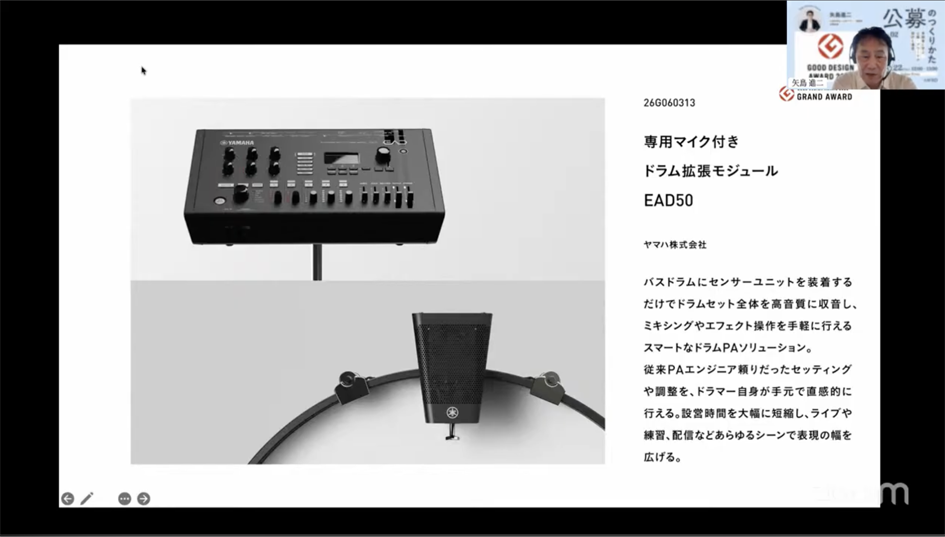
Yajima described the EAD50 as a product that drummers had long been waiting for. Initially launched in North America, it is now being adopted by drummers and recording studios around the world.
In the judging process, the product was recognized not only for its innovative features that give performers greater freedom, but also for its stylish, intuitive design that integrates naturally into a drum kit. According to Yajima, it is a product that could only have come from Yamaha, a company with a long history of expertise in both musical instruments and audio technology.
Discovering Value Through Diverse Perspectives
The Good Design Award brings together approximately 100 judges from diverse professional backgrounds, including designers, architects, researchers, and journalists.
— Asami: While functions and features may be relatively easy to compare, qualities such as beauty and social significance seem more subjective and likely to be evaluated differently depending on the judge. How do you approach these aspects in the judging process?
— Yajima: Precisely because each judge brings a different perspective, the key is to identify the qualities that can be recognized as valuable across those different viewpoints. Even when opinions differ, we work toward consensus by exchanging perspectives and asking questions such as, “Wouldn't it be good for society to have something like this?” or “Aren't there people who really need this?”
— Asami: So even among the judges themselves, there are moments of discovery when someone realizes, “I hadn't thought of looking at it that way.”
— Yajima: Exactly. Professionals from different fields bring their own perspectives to the table and work together to arrive at a shared conclusion. That process itself is one of the defining features of the Good Design Award.
Naturally, discussions can become quite lively, and opinions sometimes clash. But underlying it all is a shared commitment to discovering what makes something good.
Our discussions often revolve around observations such as, “This aspect is particularly strong,” “This has the potential to lead the industry,” “It may not have a proven track record yet, but it shows great promise,” or “This is something we should encourage and support.”
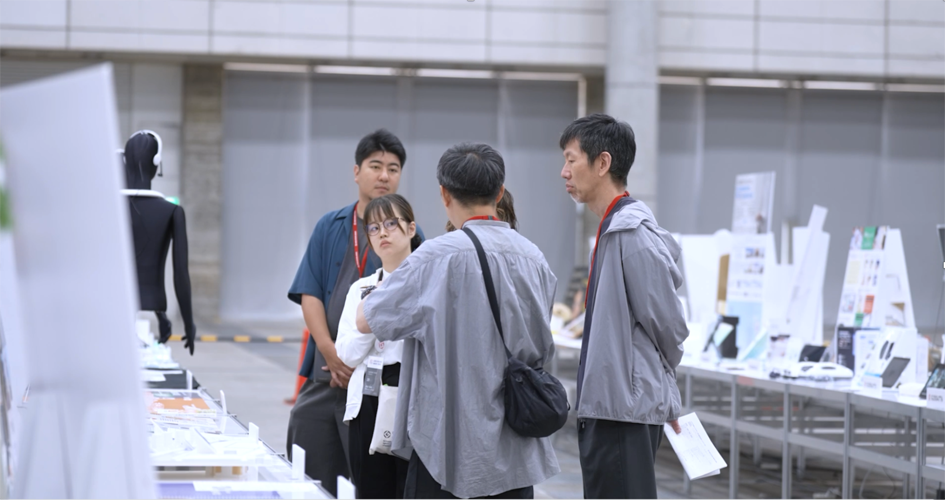
Evaluation is not simply about ranking entries, but also about discovering value and potential that have yet to be fully articulated, through diverse perspectives.
In the Age of AI, How Will the Role of Human Evaluation Change?
The conversation then turned to how the growing use of generative AI might transform design and evaluation.
— Asami: Looking ahead to the future of design and open competitions, what changes do you anticipate?— Yajima: Naturally, one of the major challenges will be how we approach AI. Using AI in the development process will likely become standard practice, and it will increasingly be integrated into technical drawings and CAD systems. How we evaluate designs created with the assistance of AI is something we still need to discuss and explore.
— Asami: Are there already entries submitted to the Good Design Award that involve the use of AI?
— Yajima: I think both companies and individuals are already using generative AI in some form. We're no longer at a stage where we can simply say it shouldn't be used. What matters is how it is used, and whether it genuinely contributes to creating better outcomes and enhancing human creativity. Those are the aspects we need to examine.
That said, we still don't know how well AI can evaluate sensory qualities such as beauty, comfort, or how pleasant something feels to sit on. Even if a computer produces a numerically optimal solution, that doesn't necessarily mean the resulting design will feel comfortable in reality. Humans have an extraordinary range of sensory abilities that allow us to perceive factors such as humidity, atmosphere, and many other subtle environmental conditions.
— Asami: So what is mathematically optimal isn't necessarily the same as what people experience as comfortable. The emergence of AI may represent a major turning point for the Good Design Award as well.
Defining the Purpose: The Starting Point for Designing an Open Competition
In the latter half of the session, the discussion also explored what companies and local governments should consider when designing and organizing open competitions.— Asami: When a company or local government decides to launch an open competition, what should they pay attention to first?
— Yajima: To reiterate an earlier point, the first step is to clearly define why you are organizing the competition. I can say with confidence that without a clear purpose, it is unlikely to succeed.
The objective might be to commercialize a product, discover new designers, stimulate creativity within an organization, or strengthen corporate communications. The structure of the competition needs to be designed according to its purpose.
— Asami: In the case of the Good Design Award, the overarching mission of “improving people's lives and society through design” has remained consistent since its establishment, while the evaluation criteria and systems have evolved with the times.
So the same principle applies when companies or local governments organize their own competitions: defining the purpose comes first.
When it comes to attracting participants, is it also important to take a proactive approach and reach out directly to the people you want to participate, rather than simply waiting for applications?
— Yajima: Absolutely. We sometimes reach out directly to leading companies or designers in a particular field. It's not just about making the competition widely known; it's also important to actively engage the people you want to attract.
At the same time, the competition itself needs to be something people genuinely want to enter. I believe combining several approaches is essential to encouraging participation.
Making Open Competitions a Place to Discover Untapped Potential
Toward the end of the event, Yajima also shared a message for young creators.
— Asami: I imagine many young creators are watching today's session. To close, could you share your expectations or a message for them?
— Yajima: In recent years, more flexible ways of working, such as side jobs and multiple careers, have become increasingly common. We're seeing more young creators who work for companies during the week while pursuing independent creative activities and entering competitions on weekends.
I would encourage them to explore opportunities beyond their work within a company and actively participate in a variety of open competitions. I also hope companies will support and encourage their employees in pursuing these creative activities outside the workplace.
At the close of the event, Asami reflected on the conversation, saying, “Throughout its long history, the Good Design Award has remained true to its core principles while adapting what needs to change with the times. This approach offers valuable lessons for any open competition.”
What emerged from this conversation is that there is no single formula for creating a successful open competition. Its structure should be shaped by its purpose, whether that is bringing ideas into production, discovering new talent, or communicating value to society. Each objective requires a different approach.
At the same time, the fundamental purpose and vision must remain consistent, while evaluation criteria and rules should evolve in response to changes in society and technology. By bringing together people with different perspectives to discuss what makes something good, competitions can uncover value that has yet to be fully recognized or articulated.
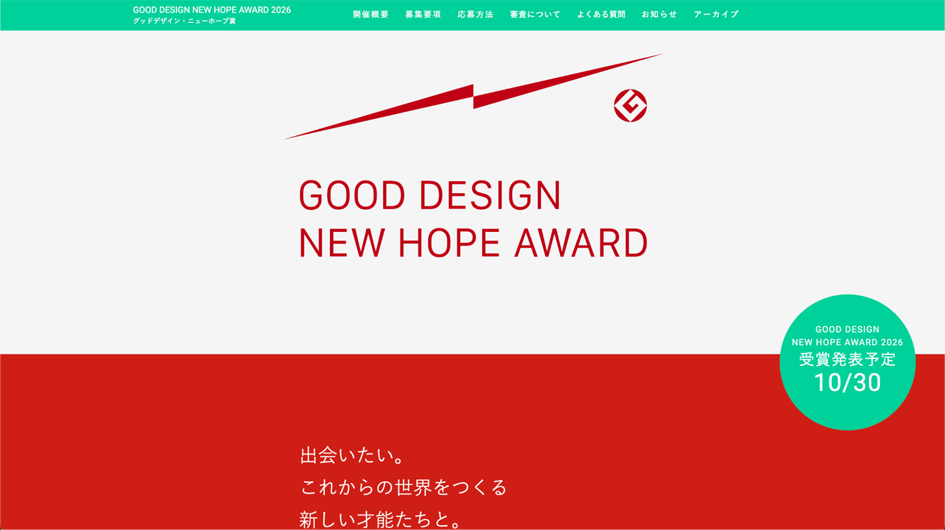
As AWRD's guiding philosophy states, “An open competition is an invitation to unlock society's potential.” Open competitions are not simply about collecting fully formed answers. They invite people who might otherwise never have crossed paths to engage with new questions, discover unexpected value, and carry those discoveries forward into the future.
The 70-year journey of the Good Design Award offers an important lesson in how to continue creating meaningful open competitions: remain committed to a clear purpose while embracing change and opening doors to new possibilities.
Japan Institute of Design Promotion (JDP)
The Power of Design to Build Better Relationships Between People and Society
At the Japan Institute of Design Promotion (JDP), we have explored the evolving power of design through the Good Design Award. Japanese design has played a vital role in driving economic growth, enriching people's lives, and creating diverse forms of value.
Today, as humanity faces urgent global challenges such as climate change and poverty, the power of design is increasingly being harnessed to create new systems and relationships through collaboration among people from diverse backgrounds. Design has the potential to reconnect people with the world around them and inspire new forms of co-creation.
■Related Event
My Favorite Design 2026
Good Design Award Jury Members' Selection
Part 3: Design for Rethinking Society
https://marunouchi.g-mark.org/exhibition.html
Dates: November 15 (Sun) – November 29 (Sun), 2026
Hours: 11:00 AM – 8:00 PM (Closes at 5:00 PM on the final day of each exhibition period)
Admission: Free
Venue: GOOD DESIGN Marunouchi (1F, Shin-Kokusai Building, 3-4-1 Marunouchi, Chiyoda-ku, Tokyo)
Organizer: Japan Institute of Design Promotion (JDP)
Written and Edited by: AWRD Editorial Team
■ Coming Up Next | “How to Design a Competition Vol. 3” – Registration Now Open (Japanese Only)
The third session will focus on the “Chisan Chisho Award,” which aims to expand the possibilities of locally rooted craftsmanship and manufacturing. Beyond recognizing outstanding products, how does the award support winners in developing new sales channels and market opportunities?
We will explore the structure and practices behind designing and managing an award that helps preserve and pass on the skills, traditions, and cultural heritage of regional production communities to future generations.
Date & Time: Friday, January 22, 2027, 12:00 PM – 1:00 PM (JST)
Speakers:
Takafumi Nomura / Copywriter, Corporate Branding, President's Office, Nakagawa Masashichi Shoten Co., Ltd.
Kazuhiko Asami / AWRD Producer, Loftwork Inc.
Platform: Zoom Webinar
Admission: Free
Organizer: Loftwork Inc.
【Registration URL】
https://loftwork.com/jp/event/...