AWRD meets GLOBAL CREATORS" (#AMGC) is a series of articles by AWRD, an open call and co-creation platform for companies, local governments and creators to work together on diverse themes.
Under the theme of "new sensibilities," we will spotlight up-and-coming challengers from around the world who are active in various fields such as design, art, and business, and touch upon their creations, activities, the value of public competitions, and the unique culture of their countries.
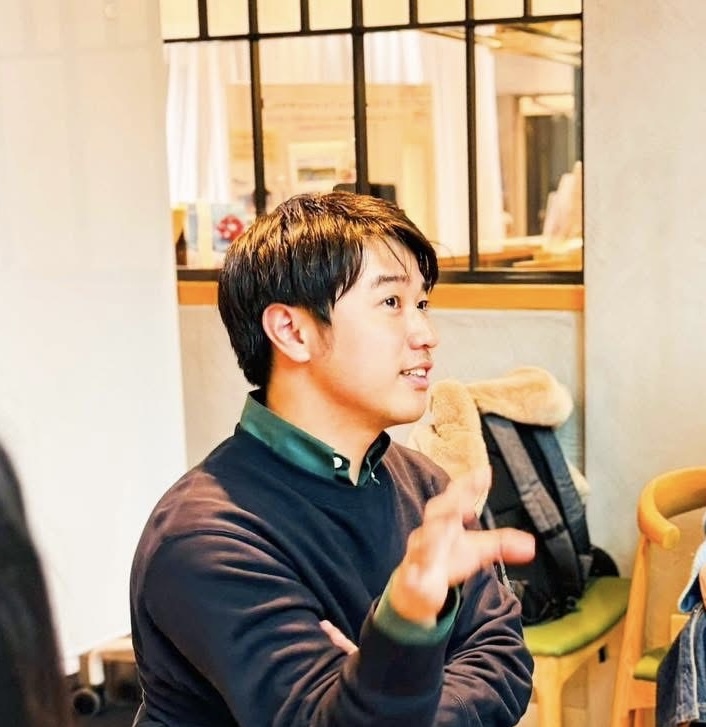
The featured speaker this time is Taisei Shobayashi, who runs "Maki Competition," a co-creation competition that links ideas and practices, starting from "Mottainai (What a waste) places" lying dormant in the community.
The competition is not limited to public spaces and underutilized lands, and goes beyond the conventional competition framework that tends to be completed only by specialists.
We will look at their philosophy and practice of designing the process itself, which involves asking questions and creating places.
What was the impetus for starting the Maki Competition? Why did you decide to start an idea competition on the theme of "wasteful places in the community" or "underutilized public space"?
I have been conducting research and practice through a series of dialogues with local residents. What I have frequently heard in this process is the candid comment, "I wish this place could be used more. There are many places throughout Japan that have potential but are not being utilized. We chose the idea competition method as an opportunity to bring new perspectives to these "wasteful places" and to unintentionally move the local community. The Maki Competition is an initiative that we launched based on our belief in the potential of places to become a catalyst for the community.
How do you think the Maki Competition differs from conventional architectural and urban planning competitions and projects?
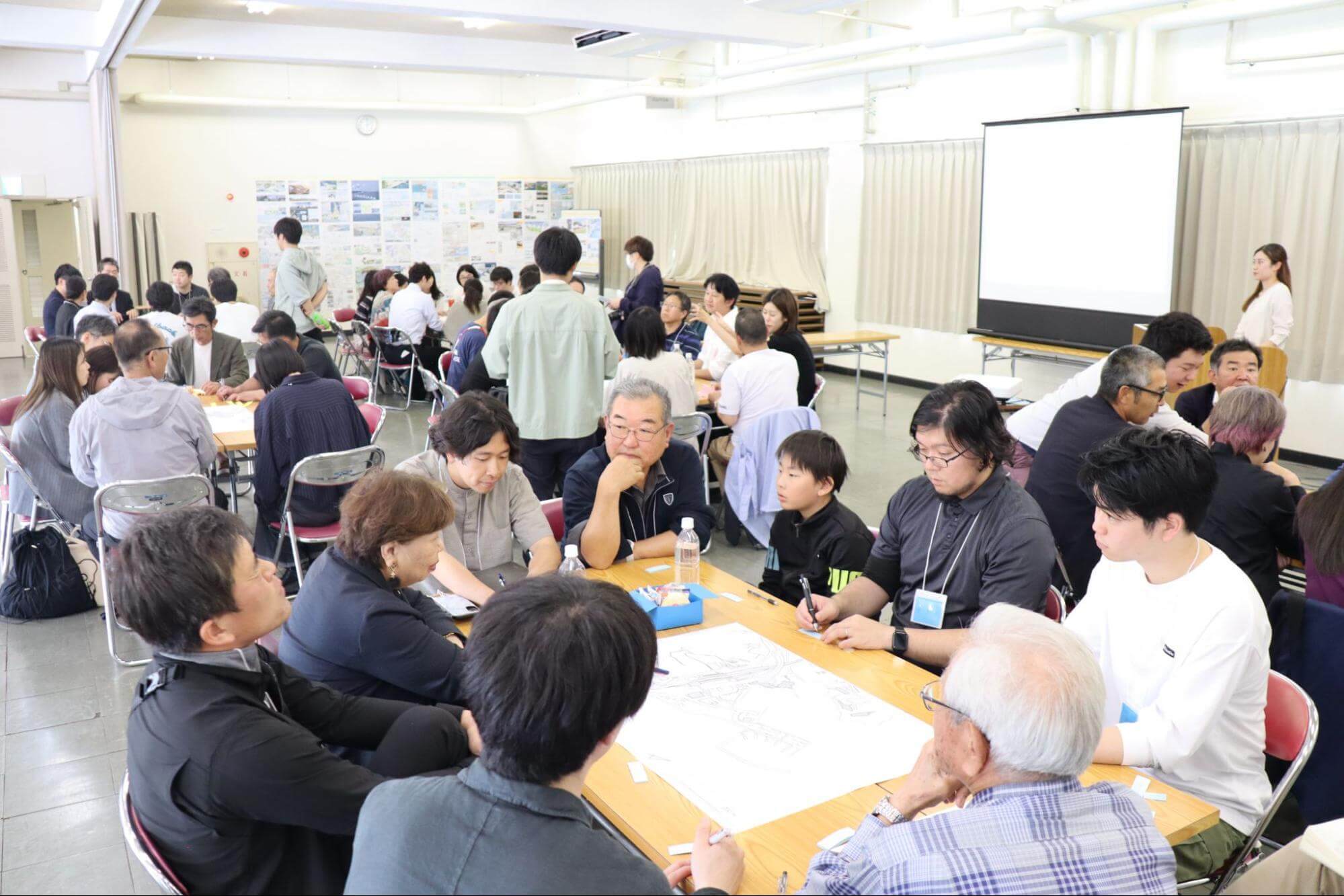
I think that most of the conventional architectural and urban planning competitions are completed by specialists. On the other hand, the competition process is supposed to have the power to move society. In Maki competitions, expertise and positions are put aside and a forum is created for discussion, including local people. By presenting a concrete "form," dialogue is generated, and the power to involve the local community rises. I believe this is the main difference between the two.
What kind of ideas have been gathered and realized so far in the Maki Competition?
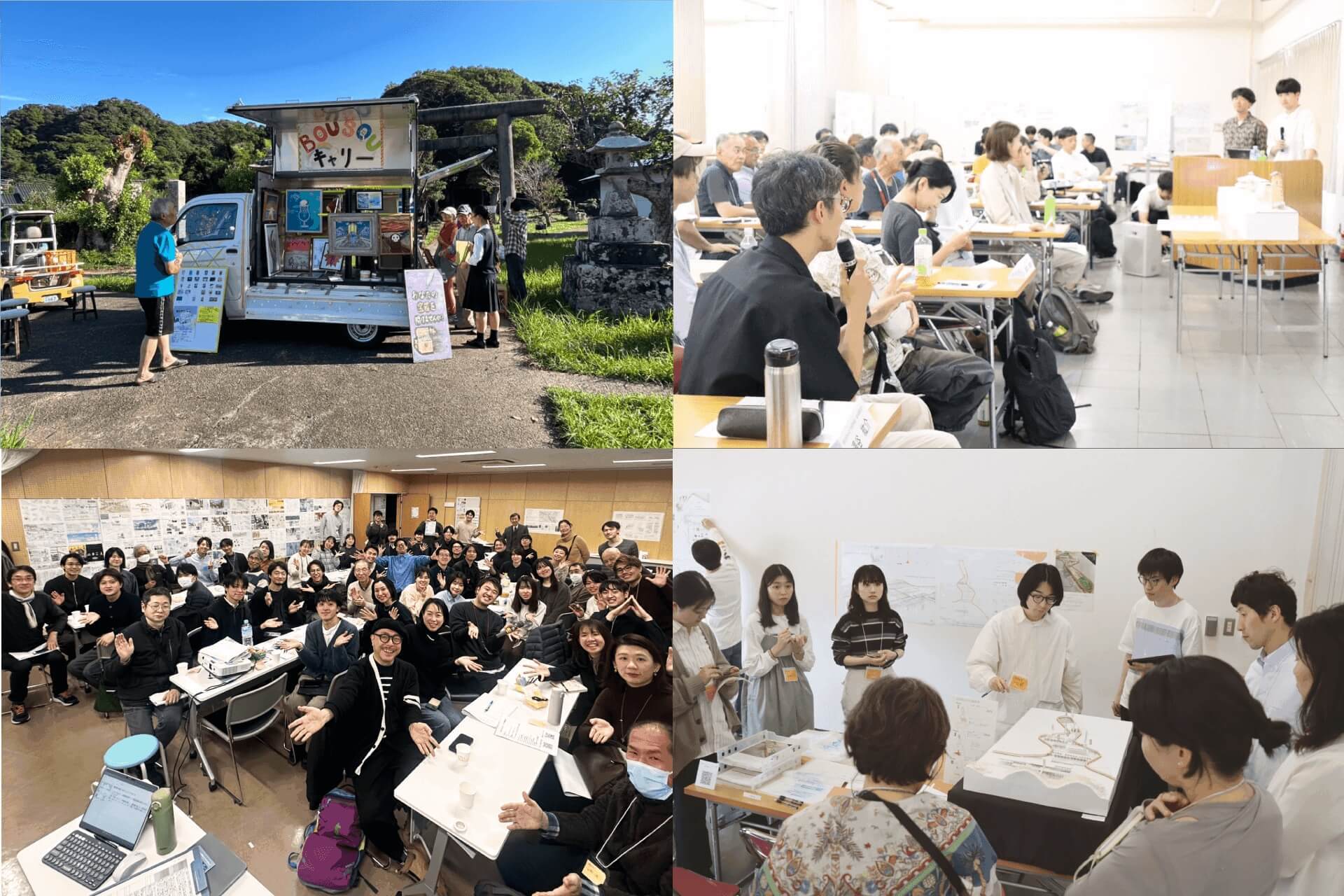
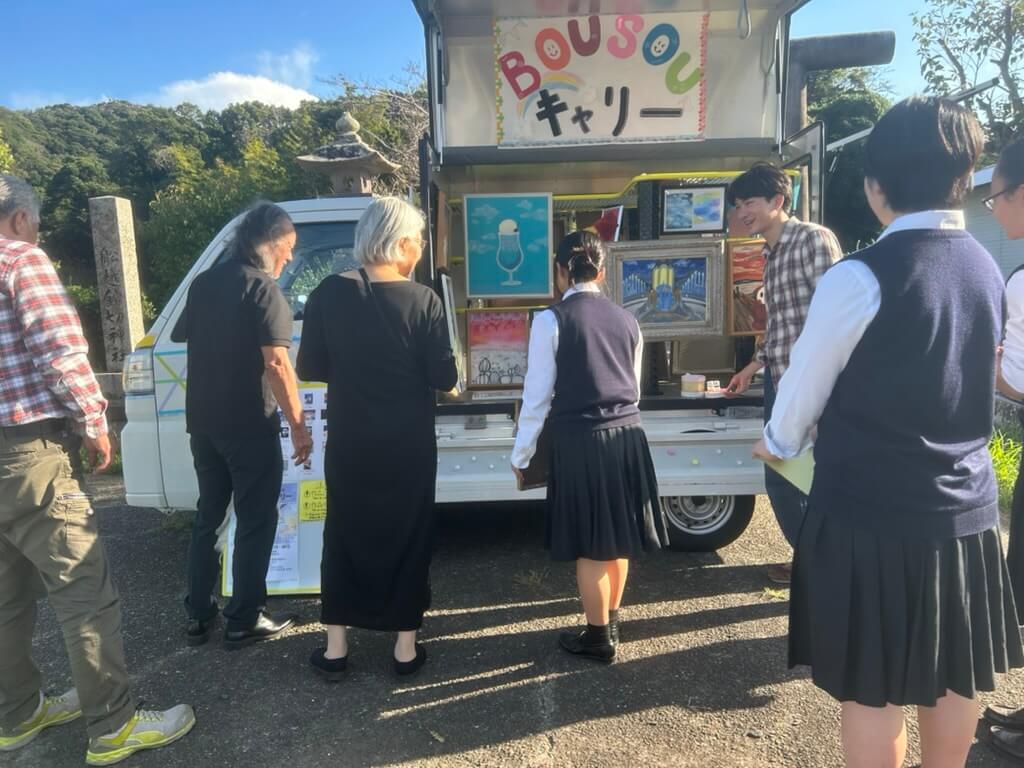
In Tateyama City, Chiba Prefecture, where we held our first Maki Competition, we targeted the Tsumesho (fire brigade station). Various ideas were gathered, including a proposal to reinterpret the Tsumesho as a community hub, a plan to create a plaza by separating the firefighters' garage from the waiting area, and a proposal for a Tsumesho where art can be exhibited. In fact, the proposals have led to the development of proactive practices, such as firefighters reviewing flow plans based on the proposals, holding radio exercises in the plaza, and exhibiting artwork by high school students.
In the Maki Competition, we emphasize that we do not stop at proposals, but look at the implementation of the proposal as well. In past examples, what was the process of "idea → implementation" and what were some of the hurdles you faced?
In Tateyama City, we received 25 groups of applicants, and in Toba City, 78 groups of applicants. My impression is that many of the proposers who proceeded to implementation were those who visited the community many times and were involved as members of the community. Local acceptance and initiative are essential for implementation. Although there are a certain number of people who are moved by the enthusiasm of the proposer, it is not easy to spread that enthusiasm throughout the community. Another major hurdle is resistance to breaking existing rules and customs. The key will be how to overcome these adjustments.
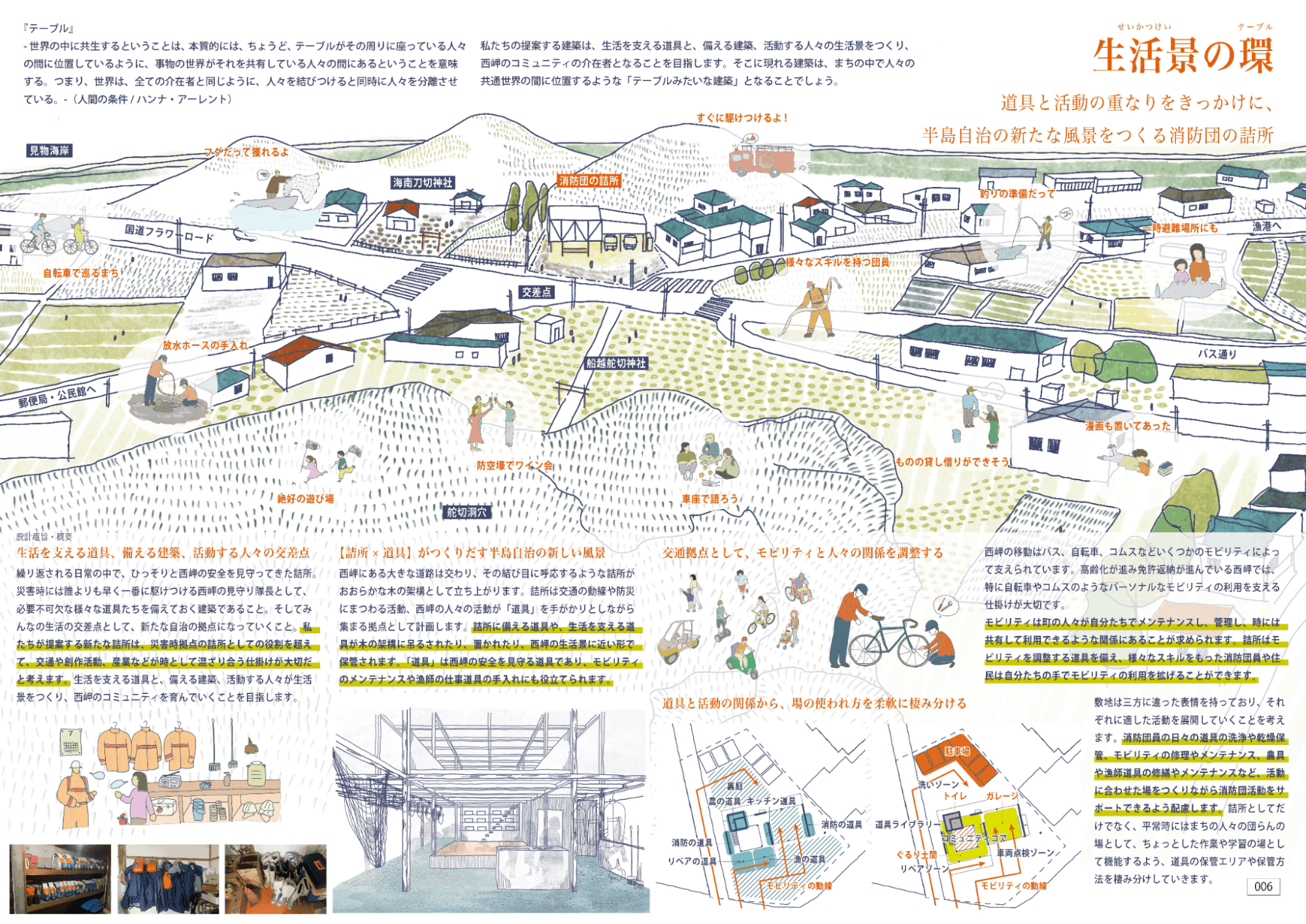
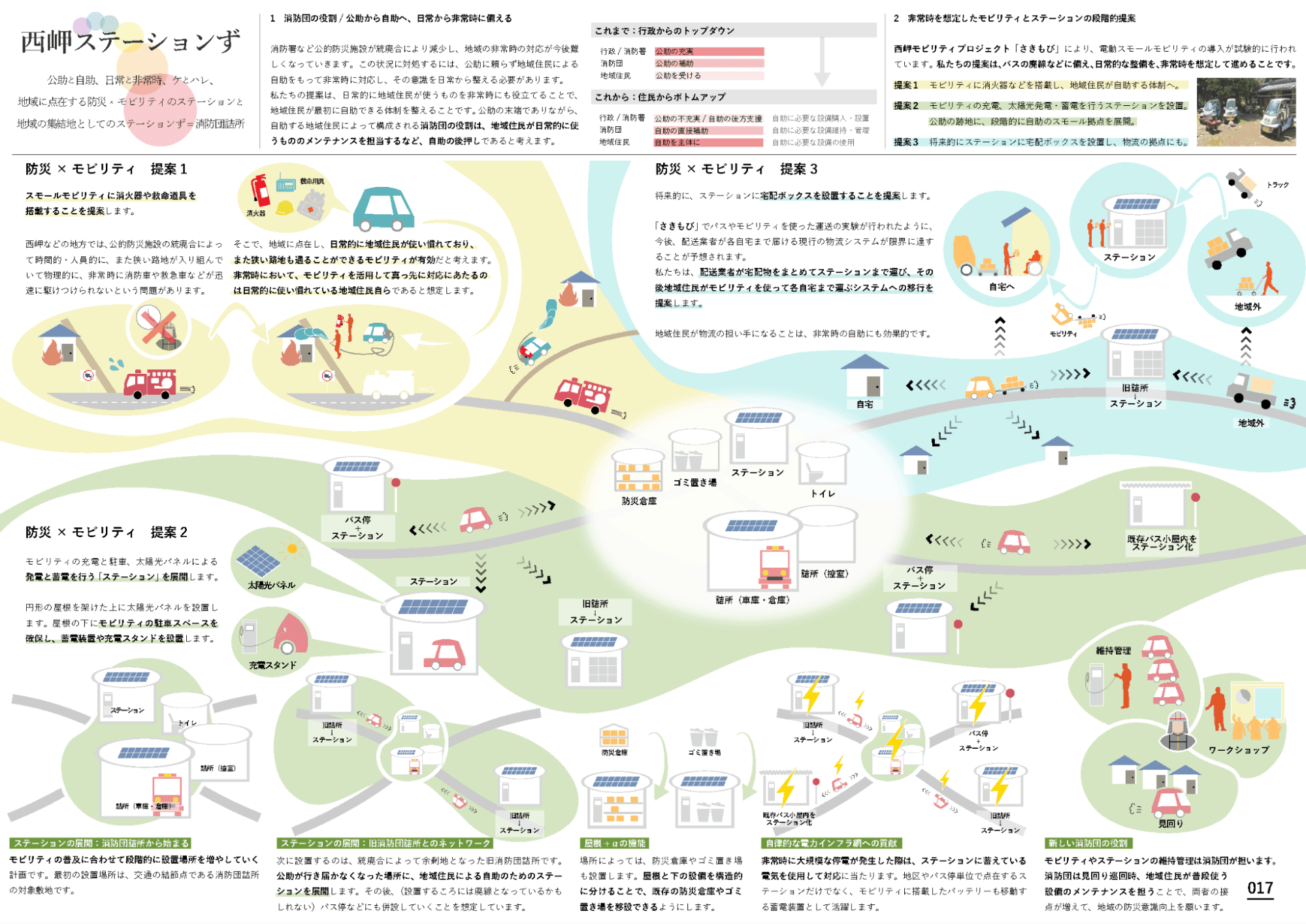
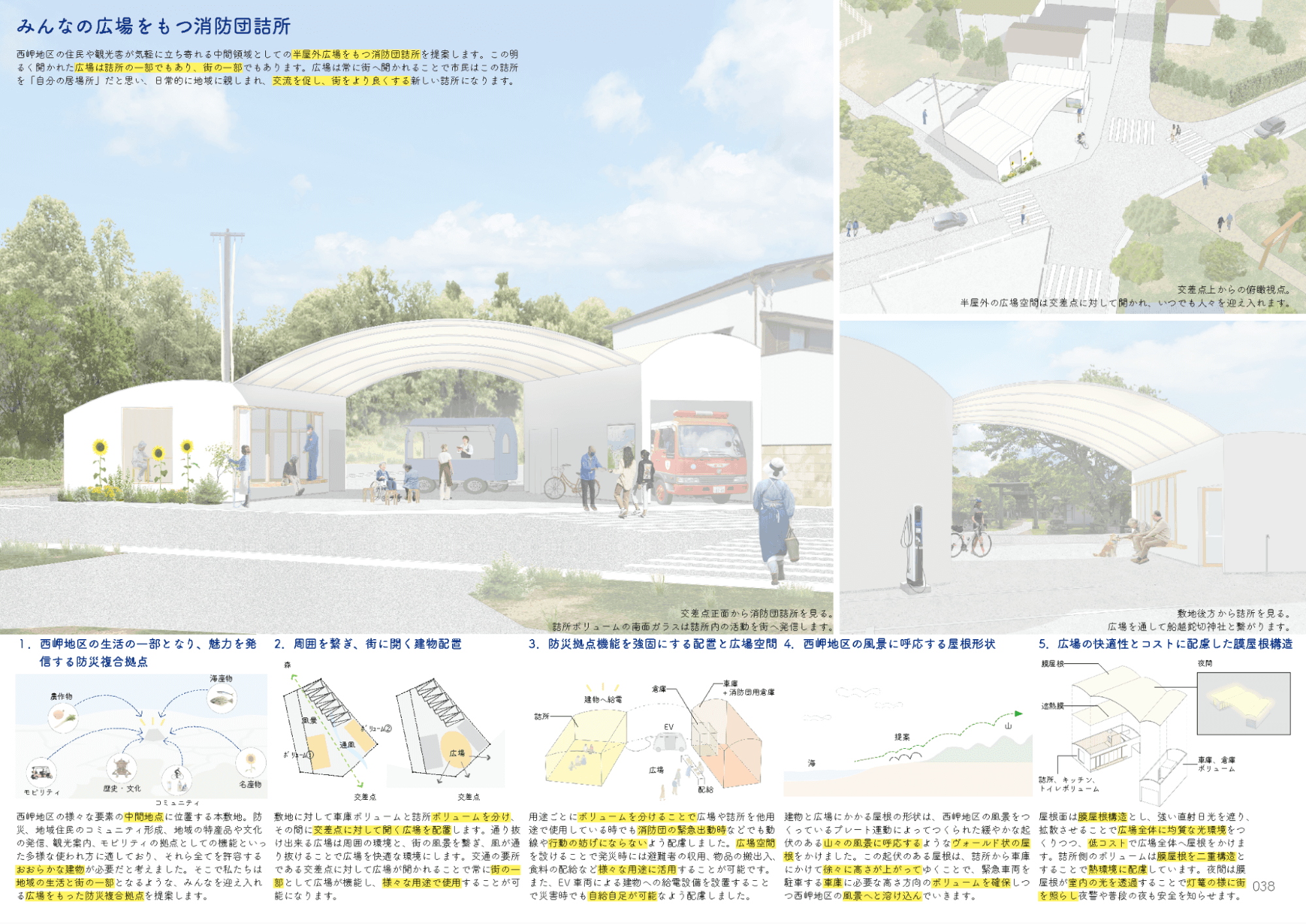
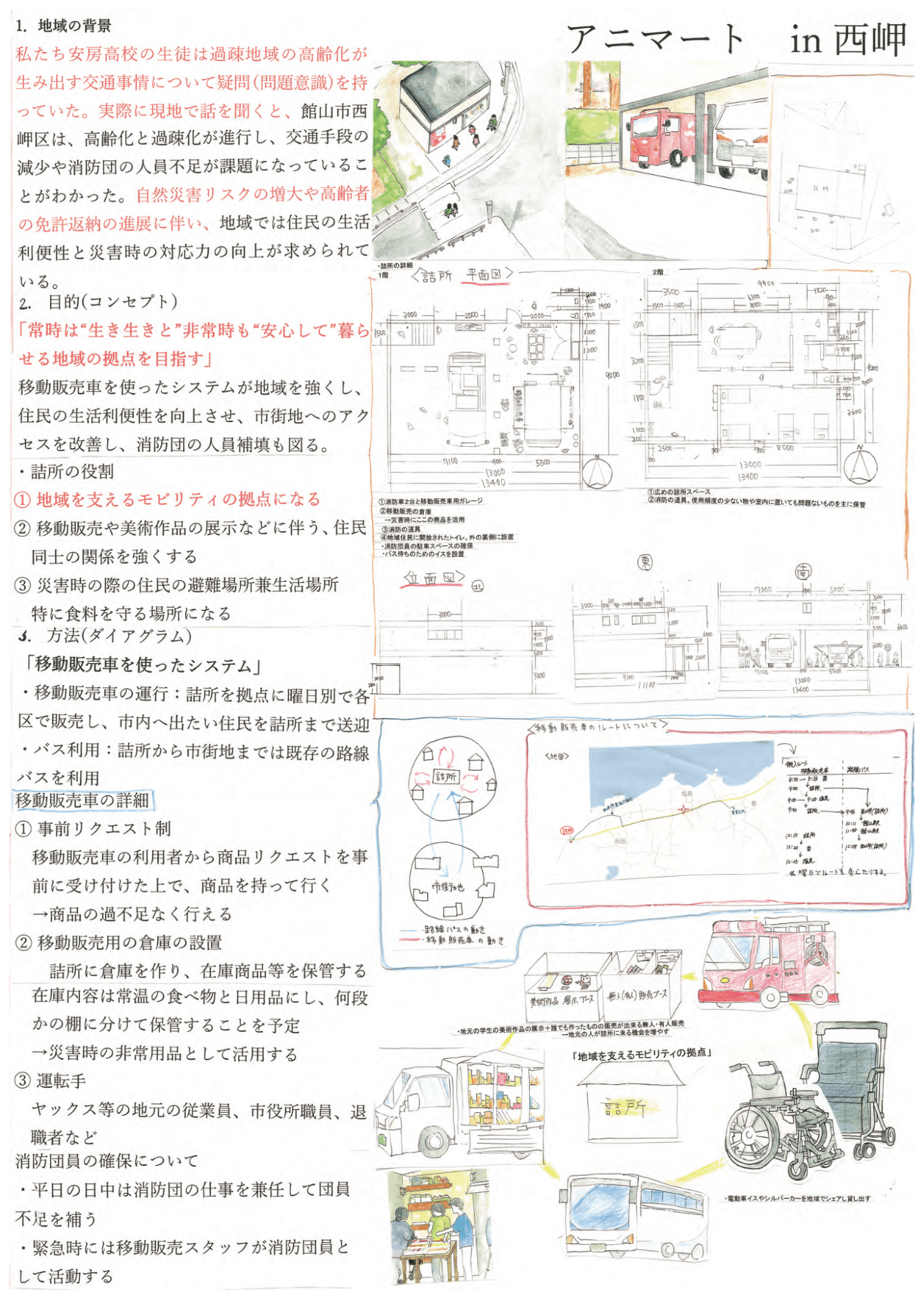
You have already tried out the Maki Competition in several regions, including Tateyama in Chiba, Toba in Mie, and now in the Kita Ward area of Tokyo.
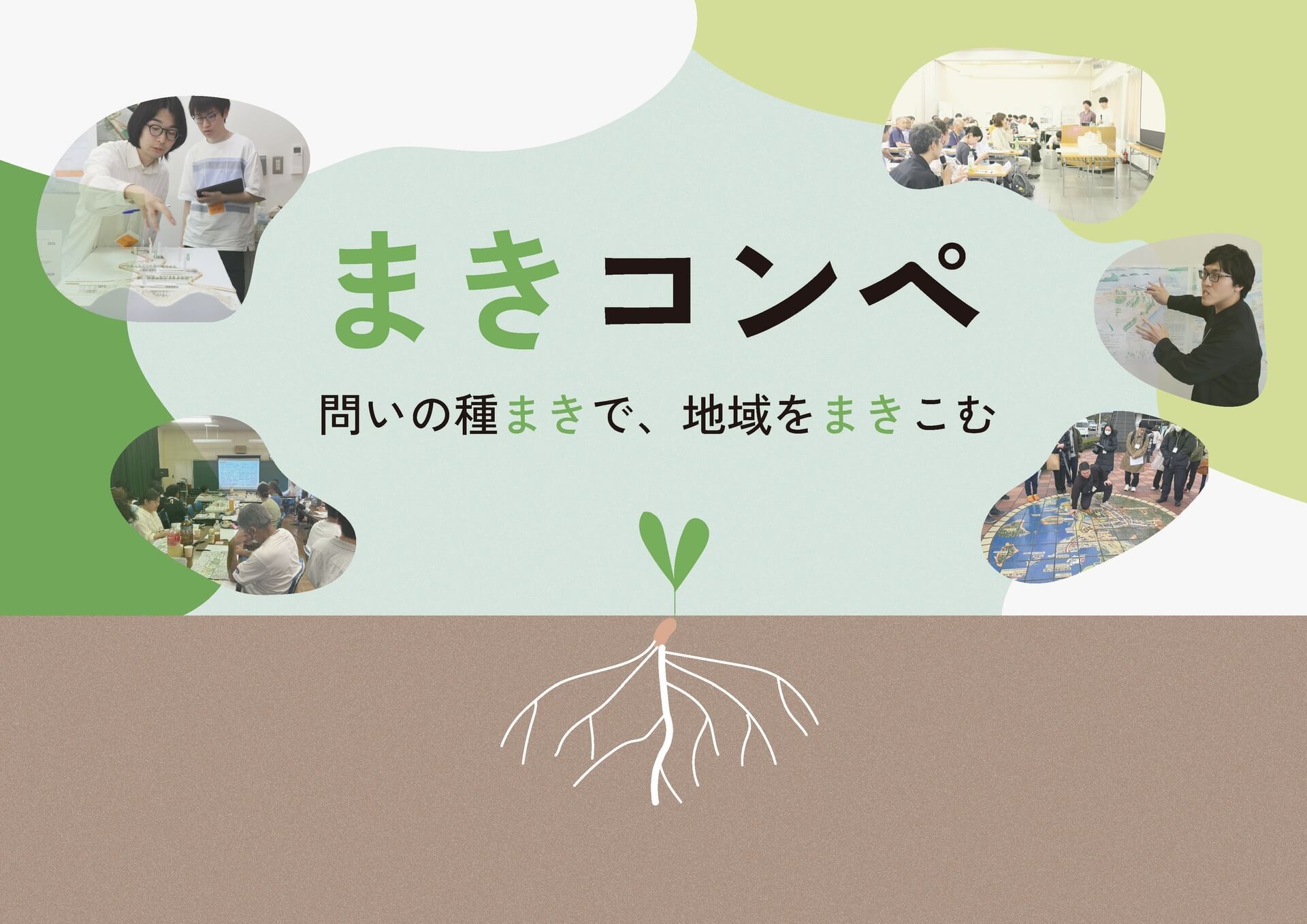
The Maki competitions to date have been held as a result of feedback from the local community. This year, we are picking up those voices and setting up a platform where anyone can hold the competition anywhere. Over the next few years, we plan to implement the regions raised there in turn. We have also begun collaborating with companies such as JR Freight and East Japan Railway Company, and we plan to expand the program to other idle land throughout Japan. In the future, we aim to establish an operating model while narrowing down the number of events.
What does it mean to you to "ask questions" and "create places"?
I see myself as a "bird" that moves around the region. While I continue to be involved, I always look at the situation from a bird's eye view. I believe that this perspective allows me to pose questions that would be difficult to answer if I were on the inside of the community. I also believe that a place is something that arises spontaneously, rather than something that is intentionally created. I believe that a place is created like bubbles floating on the surface of water, and that a chain of places can be created by the wind. My role is to create such a mechanism.
What are some of the challenges you would like to take on in the future?
I have a plan to hold the "Maki Competition AWARD," in which "Mottainai (wasteful) places" that lie dormant throughout Japan will be brought together to compete with each other in terms of their potential. By using the evaluation axis of how much potential a place has to involve the local community, we will be able to reevaluate the local space from a new perspective. Through this project, we hope to uncover "Mottainai Places" one after another, and to spread this movement to a nationwide movement.
Taisei Shobayashi
Born in 1998 in Kita-ku, Tokyo. Currently a doctoral student at the University of Tokyo, he is the president of Machi-Asobi Labo, a general incorporated association established in November 2024. He is currently conducting research and activities in the field of fishing villages located on remote islands and at the edge of peninsulas. He is planning architectural idea competitions in Tateyama City and Toba City with an emphasis on local dialogue, using local regions as bases.